
](https://www.sglpackaging.com/wp-content/uploads/2026/09/Stand-Up-Pouch-vs-Flat-Pouch-Which-Is-Better-for-Your-Brand.webp "Stand Up Pouch vs Flat Pouch: Which Is Better for Your Brand? 1")
I often see brands choose a pouch based mainly on appearance. That can become expensive when the package does not match the sales channel, filling process, or consumer use.
A stand up pouch is usually better for brands that need strong shelf visibility, resealable convenience, and a premium retail presentation. A flat pouch is usually better when lower cost, compact storage, efficient shipping, or single-use packaging matters more. I choose between them based on product type, sales channel, filling equipment, and brand positioning.
In this comparison, I use flat pouch to mean a lay-flat flexible pouch, most commonly a 3-side seal pouch. I do not mean a flat bottom or box bottom pouch. A flat pouch normally stays flat because it has no standing bottom gusset, while a stand up pouch expands at the bottom so it can remain upright after filling.
What Is the Difference Between a Stand Up Pouch and a Flat Pouch?
The bottom structure creates the clearest physical difference, but that one design choice affects shelf display, packaging cost, storage efficiency, and consumer convenience.
A stand up pouch uses an expandable bottom gusset that creates a standing base after filling. A flat pouch normally uses a simple lay-flat structure with three sealed edges and one filling opening. Stand up pouches focus on visibility and convenience, while flat pouches focus more on simplicity, compactness, and packaging efficiency.
I Start With the Pouch Structure
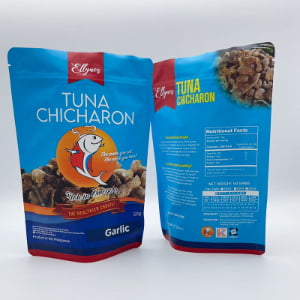
A typical stand up pouch has front and back panels plus a folded bottom gusset.
The gusset stays folded when the pouch is empty. After the product enters the pouch, the bottom expands and creates a base. This allows the package to stand without a separate carton or display tray in many retail situations.
A flat pouch is simpler.
A typical 3-side seal flat pouch is sealed along three edges. The fourth side remains open for filling and is sealed after the product is inserted. The finished pouch stays flat because it does not have a bottom gusset.
I compare the basic structures like this:
| Feature | Stand Up Pouch | Flat Pouch |
|---|---|---|
| Bottom | Expandable gusset | No standing gusset |
| Shelf position | Stands upright | Usually lies flat |
| Main print areas | Front and back | Front and back |
| Structural complexity | Higher | Lower |
| Empty storage | Compact | Very compact |
| Resealable zipper | Very common | Possible |
| Hang hole | Possible | Common for retail display |
| Single-use products | Possible | Very suitable |
| Multi-use products | Very suitable | Possible |
| Typical positioning | Retail and premium products | Efficient and cost-sensitive products |
The structural difference also affects how I think about branding.
A stand up pouch can present its main printed panel directly toward shoppers. A flat pouch normally needs a hook, display tray, outer carton, or another merchandising method if the brand wants the printed front to remain clearly visible.
I Do Not Confuse Flat Pouches With Flat Bottom Pouches
I think this point is important because the names sound similar.
A flat pouch normally lies flat.
A flat bottom pouch has a rectangular base and stands upright.
A stand up pouch also stands upright, but it usually uses a flexible bottom gusset instead of the more box-like base used by a flat bottom pouch.
I always confirm the dieline or physical sample when I source packaging because naming conventions can vary between suppliers.
Which Pouch Offers Better Branding and Shelf Presence?
I normally give the advantage to stand up pouches when the individual package needs to compete directly on a retail shelf.
Stand up pouches usually offer stronger shelf presence because the package remains upright and keeps the front graphic visible. Flat pouches can still provide excellent printing, but they normally need peg display, cartons, trays, or another support system. For brands competing visually in stores, the stand up format often creates more immediate impact.
I Think About the Pouch as a Small Billboard
Retail packaging needs to communicate quickly.
When a stand up pouch faces forward, I can use the front for:
- Brand logo
- Product name
- Flavor
- Product image
- Main benefit
- Certification marks
- Key claims
The back can carry ingredients, preparation instructions, regulatory information, barcode, or a brand story.
The pouch can stay visible without relying on another package.
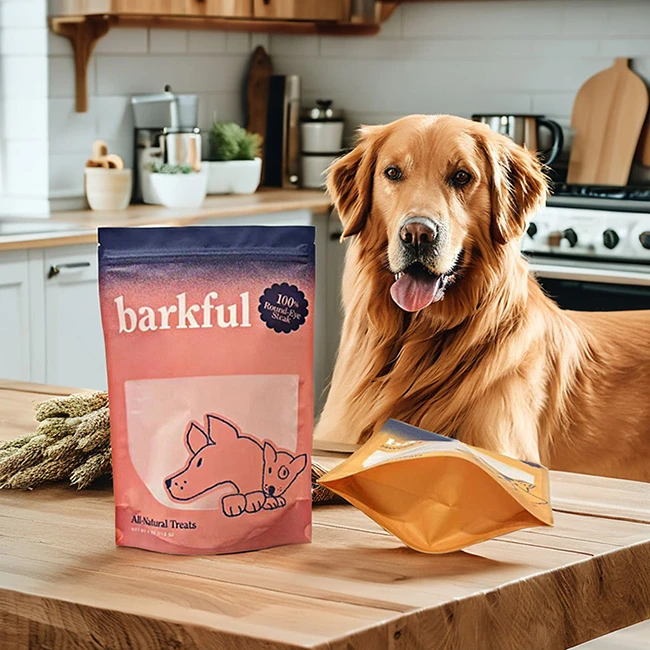
This is especially useful for products such as coffee, nuts, granola, pet treats, supplements, candy, and premium snacks.
Flat Pouches Can Still Work Well for Branding
I do not consider flat pouches weak from a graphic-design perspective.
They still provide two smooth printable surfaces. In fact, their simple flat structure can create a clean visual presentation.
The limitation is mainly physical display.
If the flat pouch lies inside a display box, that may not be a problem.
If it hangs from a peg using a hang hole, it can also create strong retail visibility.
For products sold mainly through e-commerce, subscription boxes, or sampling programs, I may value compactness more than standing ability.
I Match the Pouch to Brand Positioning
I often use this simple guide:
| Brand Goal | Format I Usually Consider First |
|---|---|
| Premium supermarket shelf presence | Stand up pouch |
| Strong front-facing graphics | Stand up pouch |
| Multi-use consumer package | Stand up pouch |
| Subscription box | Flat pouch |
| Product sample | Flat pouch |
| Single-use sachet | Flat pouch |
| Promotional giveaway | Flat pouch |
| Pegboard retail display | Flat pouch can work well |
| E-commerce-focused product | Flat pouch often makes sense |
A brand does not become premium simply because it uses a stand up pouch.
However, the standing structure can support a more premium presentation when the printing, materials, and product positioning all work together.
Which Is More Cost-Effective for Your Brand?
I usually expect a flat pouch to have a cost advantage when I compare similar materials, dimensions, printing, and order quantities.
Flat pouches are generally more cost-efficient because their simpler structure can use less material and fewer converting steps. Stand up pouches usually cost more because of the bottom gusset and additional forming requirements. However, the better commercial choice depends on total packaging cost rather than unit pouch price alone.
I Look Beyond the Price per Pouch
Unit price is easy to compare.
Total cost is more useful.
I also consider:
- Empty pouch freight
- Warehouse space
- Filling speed
- Packaging line changes
- Display trays or cartons
- Consumer convenience
- Product waste
- Rejected seals
- Finished carton size
- Retail shelf performance
A flat pouch may cost less but require an additional display box.
A stand up pouch may cost more but replace the need for that display system.
This is why I do not automatically call the cheaper pouch the more profitable pouch.
Flat Pouches Usually Win on Storage Efficiency
One major advantage of flat pouches is how efficiently they stack.
A 3-side seal pouch has almost no structural bulk before filling. This can allow more empty pouches to fit into cartons and warehouse space. Current packaging comparisons consistently identify compact shipping and storage as a major advantage of flat formats.
This can matter for international sourcing.
If I import hundreds of thousands of pouches, small differences in carton volume can affect freight and storage costs.
Stand Up Pouches Can Create More Commercial Value
The higher cost of a stand up pouch may make sense when better shelf presentation supports:
- A premium selling price
- Stronger product visibility
- Repeated consumer use
- Better brand perception
- Easier retail merchandising
I therefore compare the added cost with the value the standing package creates.
Which Is Better for Resealable and Multi-Use Products?
I usually start with a stand up pouch when consumers open the product many times.
Stand up pouches are generally better suited to multi-use products because the standing structure works naturally with resealable zippers and keeps the package convenient after opening. Flat pouches can also use zippers, but their strongest applications are often single-use portions, samples, or products stored inside another package.
I Think About How Consumers Use the Product
A package can look excellent before purchase and still create a poor user experience.
For a 500-gram bag of nuts, the consumer may open the pouch many times.
For coffee, pet treats, granola, dried fruit, or protein powder, the package may stay in a kitchen for days or weeks.
A resealable zipper makes sense.
The stand up structure also allows the consumer to place the pouch upright between uses.
Single-Use Products Need Less Structure
A small seasoning packet has a different job.
The consumer opens it once, removes the contents, and discards the pouch.
A bottom gusset and zipper may add little practical value.
I therefore often consider flat pouches for:
- Spice portions
- Sauce sachets
- Supplement samples
- Cosmetic samples
- Coffee samples
- Tea samples
- Trial-size products
- Promotional packs
This is one of the easiest ways I reduce unnecessary packaging complexity.
Which Pouch Works Better for Different Products?
The product itself often decides the answer faster than the branding discussion.
I usually choose stand up pouches for bulkier, multi-use retail products such as coffee, snacks, pet treats, granola, dried fruit, and powders. I usually choose flat pouches for small portions, samples, spices, supplements, cosmetics, and slim products that do not need to stand independently.
Products I Often Match With Stand Up Pouches
Stand up pouches work well when the product creates enough volume to open the bottom gusset correctly.
I commonly consider them for:
| Product | Why the Stand Up Format Can Work |
|---|---|
| Coffee | Strong branding and zipper options |
| Nuts | Resealable and easy to display |
| Granola | Good volume and retail presentation |
| Pet treats | Multi-use convenience |
| Protein powder | Larger fill volume |
| Dried fruit | Resealability |
| Candy | Shelf presence |
| Snack mixes | Upright retail display |
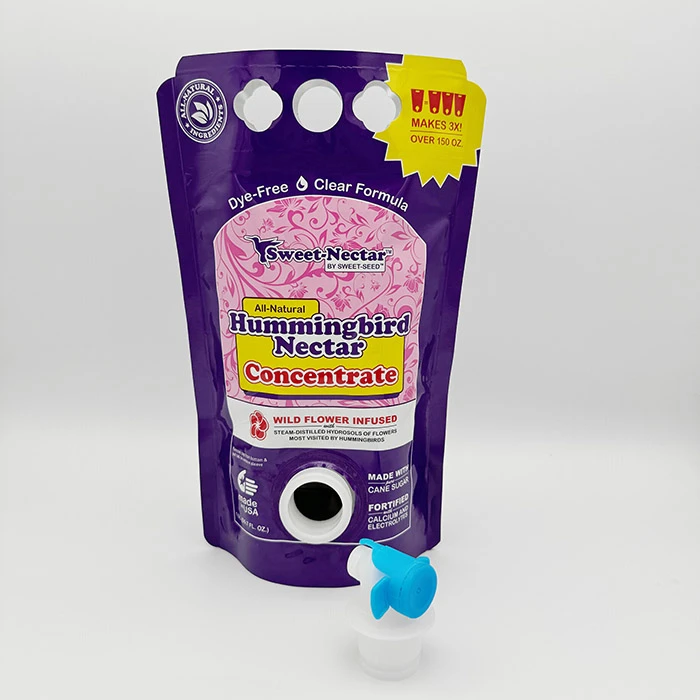
| Household refills | Spout or zipper options |
Products I Often Match With Flat Pouches
Flat pouches work well when compactness matters more than an upright display.
| Product | Why the Flat Format Can Work |
|---|---|
| Spices | Small portion and low structural need |
| Seasoning | Efficient single-use packaging |
| Coffee samples | Compact shipping |
| Tea samples | Thin and lightweight |
| Supplements | Portion-controlled sachets |
| Cosmetic samples | Easy to include in kits |
| Small snacks | Cost-efficient packaging |
| Promotional items | Efficient distribution |
I still test the product before finalizing dimensions.
Product weight alone is not enough.
A light snack and dense powder may have the same net weight but require very different package volumes.
Does One Pouch Protect Food Better Than the Other?
I do not use pouch shape as a shortcut for shelf-life performance.
Neither stand up pouches nor flat pouches automatically provide better oxygen, moisture, aroma, or light protection. Both can use high-barrier flexible films. Product protection depends mainly on the laminate, sealant layer, film thickness, sealing quality, filling process, and storage conditions rather than whether the pouch can stand upright.
I Separate Pouch Structure From Material Structure
The pouch shape mainly affects:
- Presentation
- Filling
- Storage
- Consumer use
- Standing stability
- Converting complexity
The material affects:
- Oxygen barrier
- Moisture barrier
- Aroma retention
- Light protection
- Puncture resistance
- Seal performance
- Temperature resistance
A flat pouch can use an aluminum foil laminate.
A stand up pouch can use the same type of high-barrier laminate.
A recyclable mono-material structure may also be developed in either format when the material technology and application allow it.
I therefore choose the pouch format and material structure as two connected but separate decisions.
How Do I Choose Between a Stand Up Pouch and a Flat Pouch for My Brand?
I think the best decision comes from answering a few commercial questions before asking suppliers for quotations.
I choose a stand up pouch when shelf visibility, premium presentation, and repeated consumer use create enough value to justify the added structure. I choose a flat pouch when efficiency, compact shipping, single-use behavior, or lower packaging cost matters more. I also check filling equipment before approving either format.
I Start With the Sales Channel
If the product goes directly onto a supermarket shelf, I often lean toward a stand up pouch.
If the product sells mainly online, I may lean toward a flat pouch.
If it sits inside a carton, I usually question whether I need the standing base at all.
If it hangs from a retail peg, a flat pouch may provide everything I need.
I Check the Filling Line
Packaging design cannot be separated from manufacturing.
A company may already have equipment optimized for flat pouches.
Another line may be designed for premade stand up pouches.
Changing format can affect:
- Pouch feeding
- Opening
- Product dosing
- Filling speed
- Zipper position
- Bottom gusset expansion
- Final sealing
- Reject rate
Current industry comparisons recommend matching the pouch structure to the actual filling setup rather than selecting it only from a graphic mockup.
I Look at Consumer Behavior
I ask:
Will the customer use the whole product at once?
If yes, I often favor the flat pouch.
Will the customer use it over several days?
If yes, I usually consider the stand up pouch and zipper.
I Compare Total Value
My final comparison looks like this:
| Decision Factor | Flat Pouch | Stand Up Pouch |
|---|---|---|
| Lower structural cost | Strong advantage | Higher cost |
| Compact empty storage | Excellent | Good |
| International pouch shipping | Excellent | Good |
| Shelf standing | No | Yes |
| Premium retail presentation | Moderate | Strong |
| Resealable multi-use products | Possible | Strong |
| Single-use products | Excellent | Often unnecessary |
| Front-facing shelf branding | Needs support | Strong |
| Peg display | Strong with hang hole | Possible |
| Material barrier options | Broad | Broad |
| E-commerce efficiency | Strong | Good |
| Retail shelf impact | Moderate | Strong |
I use this table as a starting point rather than a fixed rule.
My Insights: Stand Up Pouch vs Flat Pouch-Which Is Better for Your Brand
I think the most useful answer comes from asking what job the packaging needs to perform for the brand.
A stand up pouch is better for a brand when the package needs to create shelf visibility, support repeated use, and act as part of the product's retail identity. A flat pouch is better when the brand benefits more from simple construction, low shipping volume, single-use convenience, and tighter packaging economics.
I Think Sales Channel Should Come Before Pouch Style
This is my first insight.
I would not choose a stand up pouch just because it looks more premium.
If the package never appears standing on a retail shelf, I may be paying for a feature that the consumer rarely sees.
An e-commerce product may arrive inside a shipping box.
A supplement sachet may sit inside a carton.
A cosmetic sample may be included inside a promotional kit.
In these cases, flat packaging can be more efficient.
The opposite is also true.
If the package competes directly with ten similar products in a supermarket, the ability to stand and keep the brand panel visible can create real value.
I Think Consumer Use Should Decide Whether I Add a Zipper
A zipper adds material, manufacturing steps, and cost.
I use it when the consumer needs it.
For a multi-serving pouch of nuts, coffee, pet treats, or granola, I see clear value.
For a one-serving powder sachet, I normally do not.
This simple decision can keep packaging functional without adding unnecessary features.
I Would Not Pay for Structure to Solve a Material Problem
If the product loses freshness, changing from a flat pouch to a stand up pouch will not automatically fix it.
I first check:
- Film structure
- Oxygen barrier
- Moisture barrier
- Seal quality
- Package leakage
- Filling contamination
- Storage conditions
A stronger barrier laminate may solve the problem while keeping the same pouch shape.
This is why I separate material engineering from pouch style.
I Think Flat Pouches Can Be Better for New Product Testing
When a brand is launching a new SKU, packaging cost and flexibility can matter more than premium structure.
A flat pouch can be useful for:
- Samples
- Trial launches
- Subscription testing
- Limited-volume products
- Promotional packs
The simpler format can help keep the initial packaging system lean.
If the product later moves into major retail, I may evaluate whether a stand up pouch creates enough additional shelf value to justify the change.
I Consider the Stand Up Pouch an Investment in Presentation
For retail brands, I do not treat the higher pouch cost as waste automatically.
The pouch can act as part of the merchandising system.
It can stand without a display hook.
It can make the logo easier to see.
It can support a zipper.
It can create a larger visual block when several units are placed together.
Current packaging comparisons describe this trade-off consistently: stand up pouches usually cost more, while flat pouches usually provide stronger logistics and unit-cost efficiency.
My Practical Brand Decision Framework
When I make the final decision, I ask:
| Question | If the Answer Is Yes, I Usually Lean Toward |
|---|---|
| Does the pouch need to stand on a retail shelf? | Stand up pouch |
| Will consumers open it several times? | Stand up pouch |
| Is premium presentation important? | Stand up pouch |
| Is the product relatively bulky? | Stand up pouch |
| Is it a single-use serving? | Flat pouch |
| Is compact shipping a major priority? | Flat pouch |
| Will the pouch go inside a carton? | Flat pouch |
| Is the SKU highly price-sensitive? | Flat pouch |
| Is the product mainly sold online? | Flat pouch often makes sense |
| Does the filling line already favor one format? | Follow the compatible format |
For me, there is no universal winner.
I choose the stand up pouch when the package itself needs to help sell and serve the product.
I choose the flat pouch when the packaging needs to remain simple, compact, and efficient.
That is why the better format for a brand is not always the pouch that looks more advanced. It is the pouch that supports the product, production line, distribution channel, consumer behavior, and brand position with the least unnecessary complexity.
Conclusion
I choose stand up pouches for stronger retail presence and multi-use convenience, while I choose flat pouches for lower complexity, compact logistics, and single-use efficiency. The better choice depends on the brand's real packaging job.