
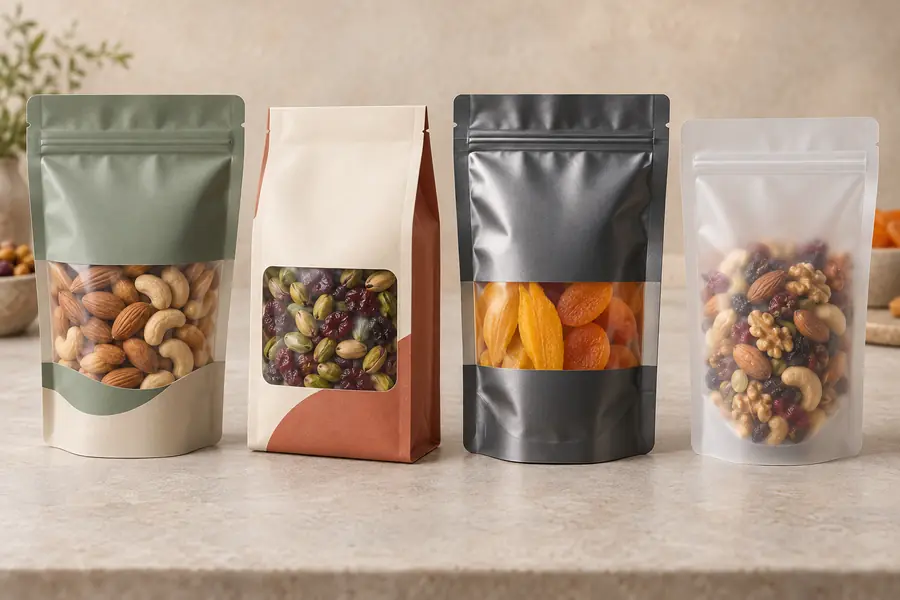
](https://www.sglpackaging.com/wp-content/uploads/2026/09/4-Nut-and-Fruit-Packaging-Ideas-for-Your-Business-to-Consider.webp "4 Nut and Fruit Packaging Ideas for Your Business to Consider 1")
Nut and dried-fruit packaging has to protect flavor and texture while still competing for attention. A beautiful bag can fail quickly if its barrier or seal is wrong.
Four packaging ideas I would consider are resealable stand-up pouches, premium flat bottom bags, high-barrier pouches with controlled product windows, and recycle-ready mono-material pouches. The right option depends on oxygen sensitivity, moisture control, shelf life, serving size, retail positioning, filling equipment, and whether nitrogen flushing is required.
In this article, I use “fruit” mainly to mean dried fruit and nut-and-fruit snack mixes. Fresh fruit needs a different approach because it continues to respire after harvest. For dried products, I focus much more on oxygen, moisture, aroma, light, sealing, and repeated consumer opening.
1. Why Should I Consider Stand-Up Zipper Pouches for Nuts and Dried Fruit?
When I need one packaging format that can work across several products and sizes, a stand-up zipper pouch is usually my first option.
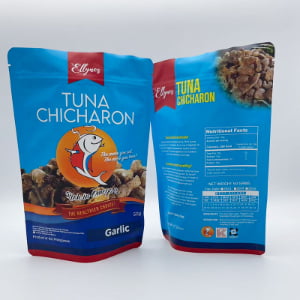
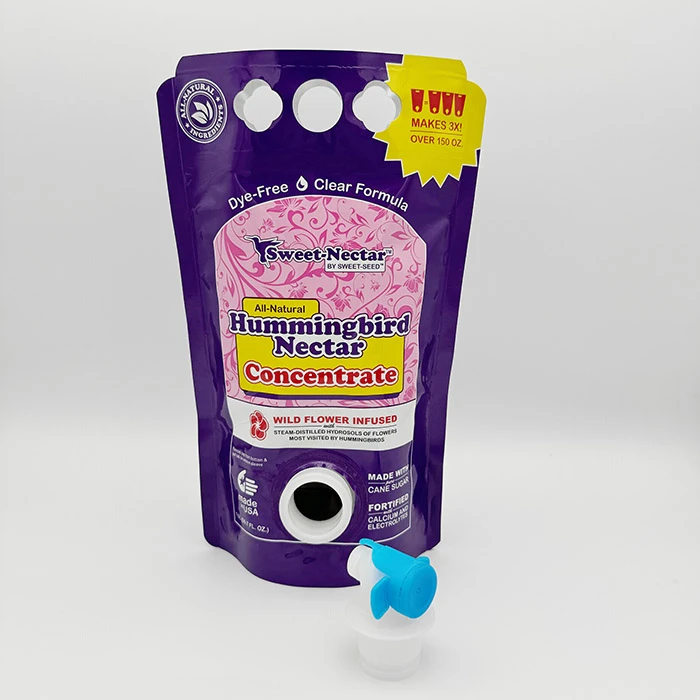
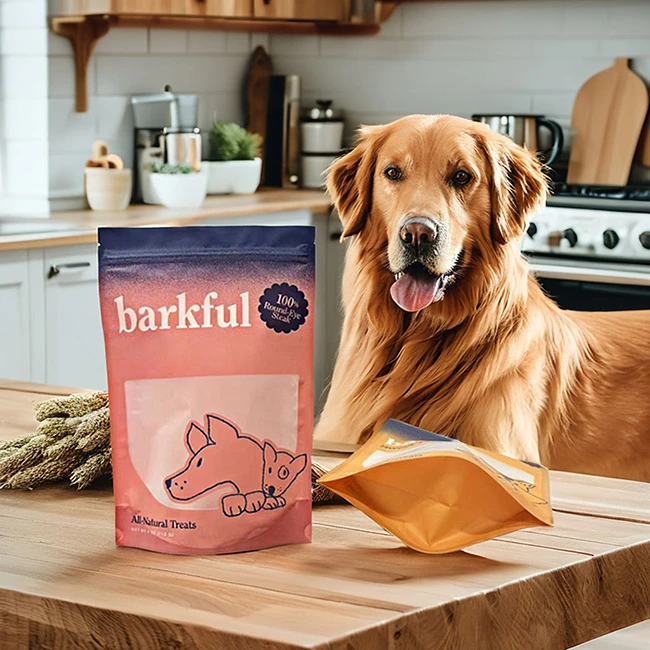
Stand-up zipper pouches are one of the most practical choices for nuts and dried fruit because they combine upright shelf display, large printing areas, resealability, and customizable barrier films. I can use them for almonds, cashews, pistachios, raisins, dried mango, cranberries, trail mixes, and many other multi-serving snack products.
I Like the Balance Between Packaging Cost and Retail Impact
A stand-up pouch uses a bottom gusset.
The gusset expands after filling and creates a base, so the finished package can remain upright on a retail shelf.
This gives me the visual benefits of a standing package without requiring the more complex box-like construction of a flat bottom bag.
I commonly consider stand-up pouches for:
- Almonds
- Cashews
- Walnuts
- Pistachios
- Peanuts
- Dried mango
- Raisins
- Dried cranberries
- Dried apricots
- Trail mix
- Nut-and-fruit blends
The zipper is particularly useful for these products.
Consumers rarely finish a family-size nut or dried-fruit pack immediately. A zipper allows them to close the bag again after opening.
I still prefer a permanent heat seal above the zipper.
The heat seal protects the unopened retail product. The zipper becomes the secondary consumer closure after the package is opened.
Barrier Performance Still Comes First
The pouch shape itself does not prevent rancidity or texture changes.
Nuts and dried fruit have different weaknesses.
Nuts contain oils that can oxidize when exposed to oxygen. Roasted and coated nuts can require particularly strong oxygen protection. Dried fruit is highly affected by moisture movement, which can change its texture. Amcor specifically notes that this difference becomes more complicated in products such as trail mix, where nuts and dried fruit are packed together.
I therefore choose a material structure after I understand the recipe.
| Product | Main Risk I Consider |
|---|---|
| Roasted nuts | Oxygen and light |
| Raw nuts | Oxygen and moisture |
| Dried fruit | Moisture change |
| Freeze-dried fruit | Very high moisture sensitivity |
| Trail mix | Oxygen + moisture balance |
| Nuts with seasoning | Oxygen, grease, seal contamination |
| Fruit-and-nut mix with chocolate | Oxygen, moisture, heat sensitivity |
A metallized laminate may work well when stronger light and oxygen protection is needed.
A transparent high-barrier film may work when the brand wants shoppers to see the product.
For me, the stand-up zipper pouch is the strongest general-purpose starting point because I can adjust the film without changing the basic retail format.
2. When Is a Flat Bottom Bag Better for Premium Nut and Fruit Products?
When I want the package itself to communicate a more structured and premium position, I often consider a flat bottom bag.
Flat bottom bags are especially useful for premium nuts, gourmet dried fruit, organic products, and high-value snack mixes. Their rectangular base provides excellent shelf stability, while the front, back, side, and bottom panels create more defined space for branding, origin information, ingredients, flavor notes, and preparation or serving ideas.
I Use Structure as Part of the Brand Experience
A flat bottom bag looks more like a flexible box than a normal pouch.
It usually provides:
- A flat rectangular base
- Front and back panels
- Two side gussets
- Strong shelf stability
This gives me more control over how information appears.
For example, I can use the front panel for the brand and product name.
One side can explain where the almonds or dried mango came from.
The other side can show flavor information or a brand story.
The back can carry nutrition facts, ingredients, barcode, and other required information.
I like this format for:
- Premium pistachios
- Gourmet almonds
- Macadamia nuts
- Organic dried fruit
- Luxury fruit-and-nut mixes
- Gift-oriented snacks
- Larger family packs
The Wider Base Can Help With Heavier Products
Nuts can be relatively dense.
A larger bag of cashews or mixed nuts places significant weight near the bottom of the package.
A flat bottom design can distribute this load over a broader base.
This usually gives me better standing stability than a narrow pouch.
That can matter when products are displayed individually rather than supported by a shelf tray.
I Do Not Use Flat Bottom Bags Only Because They Look Premium
The format normally involves more converting complexity than a standard stand-up pouch.
That can influence:
- Bag price
- Filling compatibility
- MOQ
- Production setup
- Artwork preparation
- Packing speed
I therefore ask whether the additional structure creates enough commercial value.
| Business Situation | My Preference |
|---|---|
| Premium supermarket range | Flat bottom bag |
| Gourmet gift product | Flat bottom bag |
| Mainstream daily snack | Stand-up pouch |
| Price-sensitive product | Stand-up pouch |
| Large premium family pack | Flat bottom bag |
| E-commerce refill product | Stand-up pouch may be enough |
I also use the same barrier logic that I use for stand-up pouches.
A flat bottom bag does not automatically preserve nuts better.
It can use a high-barrier foil laminate, metallized structure, transparent barrier film, or recyclable mono-material structure depending on the product.
The premium geometry helps branding and stability. The film and seals still determine much of the freshness performance.
3. Should I Use a Clear Window in Nut and Fruit Packaging?
Dried fruit and nuts are visually attractive products. A transparent window can help customers see color, size, texture, and ingredient quality before buying.
A clear-window pouch can be a strong packaging idea when product appearance helps drive purchase decisions. I use windows carefully because transparency can reduce light protection, and the selected clear film may have different oxygen and moisture performance from opaque metallized packaging. The best approach is to balance product visibility with the required shelf life.
Product Visibility Can Build Confidence
Many consumers want to know what is actually inside the bag.
This matters for products such as:
- Whole cashews
- Premium almonds
- Pistachios
- Colorful dried mango
- Dried strawberries
- Cranberries
- Trail mix
- Fruit-and-nut blends
A window allows shoppers to judge:
- Piece size
- Color
- Product uniformity
- Visible coatings
- Ingredient variety
- Amount of broken product
I think this can be particularly valuable for premium products where the visual appearance supports the price.
I Do Not Assume Transparent Means Low Barrier
This is where material selection becomes important.
Traditional metallized packaging blocks light and can provide strong oxygen and moisture protection.
However, transparent high-barrier films also exist. Amcor notes that transparent barrier alternatives can be developed for nuts, while fully printed PP or PE barrier packaging can also replace some conventional metallized structures depending on the application.
So I do not ask only:
“Should the bag have a window?”
I ask:
“What barrier does the transparent area provide?”
A low-barrier clear window and a high-barrier transparent film are not the same thing.
Light Exposure Is Still a Trade-Off
Nuts contain oils.
For some products, light can contribute to quality deterioration.
That is why I usually keep a window controlled rather than making every package completely transparent.
A small vertical window, bottom window, or shaped window may provide enough visibility while leaving most of the pouch opaque.
For high-fat nuts or long shelf-life products, I may remove the window entirely.
Nitrogen Flushing Works Well With High-Barrier Pouches
I can also combine window packaging with nitrogen flushing when the material and filling process support it.
Nitrogen displaces much of the oxygen-containing air inside the pouch before sealing. This can help reduce oxidation, particularly for oil-rich nuts. It can also provide some cushioning for fragile products.
However, nitrogen flushing does not replace the barrier film.
If oxygen rapidly enters through the pouch or seals, the benefit will decline.
I therefore treat the package as one system:
barrier film + window + nitrogen + seal integrity + package size.
That system matters more than any individual feature.
4. Should I Consider Recycle-Ready Mono-Material Packaging?
Sustainability requirements are becoming a larger part of packaging development, so I increasingly evaluate mono-material PE or PP structures alongside traditional PET, metallized, and foil laminates.
Recycle-ready mono-material PE or PP pouches are worth considering when they can provide the oxygen, moisture, grease, light, sealing, and puncture performance required by the nuts or dried fruit. Newer barrier technologies can provide strong protection, but I still validate shelf life and local recycling compatibility before changing from a conventional laminate.
Traditional High-Barrier Structures Can Be Difficult to Recycle
A conventional nut or dried-fruit pouch may contain several different materials.
For example:
PET / VMPET / PE
or:
PET / AL / PE
These structures can provide excellent performance.
However, combining different material families makes conventional mechanical recycling more difficult.
Mono-material designs aim to keep most of the package within one polymer family.
Examples include:
- Mono-PE
- Mono-PP
- PE-based barrier structures
- PP-based barrier structures
Mondi currently offers mono-PE and mono-PP barrier packaging designed for recycling, including structures with high oxygen and water-vapor barrier and reclosing options.
I Still Put Product Protection First
A sustainability-oriented package still needs to protect the food.
If a weaker package causes nuts to become rancid or dried fruit to lose its desired texture, the packaging change creates another form of waste.
I therefore test:
- Oxygen transmission
- Water-vapor transmission
- Seal strength
- Zipper performance
- Puncture resistance
- Drop performance
- Filling-line performance
- Product shelf life
A current Amcor case study also demonstrates recycle-ready flexible packaging used for coated peanut snacks while retaining required moisture barrier, sealing, durability, and product protection.
Recyclability Depends on the Market
I avoid saying that every mono-material pouch is universally recyclable.
Collection systems differ.
A package may be designed for recycling but still lack a practical collection route in a particular country or city.
The zipper, coatings, labels, inks, adhesives, and barrier components also need to be considered as part of the finished package.
For me, the better commercial claim is based on the actual package and target recycling system rather than simply saying “100% recyclable” because the main film is PE.
High-Barrier Paper Is Another Emerging Direction
I also watch barrier paper developments.
Mondi currently offers dried-food packaging solutions that include mono-PE, mono-PP, and functional barrier paper. Some of these systems are designed to provide oxygen, water-vapor, and grease protection for dry-food applications.
I still see flexible plastic films as very practical for many nuts and dried fruits because of their sealing, puncture resistance, and barrier performance.
However, barrier paper gives brands another option to evaluate when the product and filling line are compatible.
How Do I Choose Between These Four Nut and Fruit Packaging Ideas?
I choose the final concept by starting with the product's most important quality risk and then adding the branding features around it.
I choose stand-up pouches for broad versatility, flat bottom bags for premium presentation, controlled-window pouches when product visibility supports sales, and mono-material structures when a recycling-oriented design is a priority. I then specify oxygen barrier, moisture barrier, zipper, nitrogen flushing, and seal performance according to the actual product and shelf-life target.
I Start With Nuts or Fruit, Not the Bag
Nuts and dried fruit should not automatically use the same film.
Amcor identifies the key difference clearly: the fats in nuts make oxidation a major concern, while dried fruit needs protection against unwanted moisture changes.
For a mix, I need to consider both.
This makes trail mix particularly interesting.
A package might contain:
- Almonds
- Raisins
- Dried cranberries
- Seeds
- Chocolate pieces
- Salt
- Seasonings
The package then needs to manage oxidation, moisture migration, grease, sharp pieces, heat sensitivity, and repeated opening together.
I Match the Packaging to the Sales Channel
Retail shelves reward strong front-facing presentation.
E-commerce rewards compact storage and shipping.
Gift packaging may reward premium structure.
Wholesale packaging may prioritize volume and unit cost.
That means the same nut product can logically use different packaging in different channels.
My Four-Idea Comparison
| Packaging Idea | Best For | Main Strength | Main Trade-Off |
|---|---|---|---|
| Stand-up zipper pouch | Most retail products | Versatility | Less structured than flat bottom |
| Flat bottom bag | Premium nuts and dried fruit | Shelf stability and branding | Higher complexity |
| High-barrier window pouch | Visually attractive products | Consumer visibility | Light/barrier trade-off |
| Mono-material barrier pouch | Sustainability-focused lines | Recycling-oriented design | Requires careful validation |
I Also Consider Package Size
Package size changes shelf-life expectations after opening.
A 50 g pouch may be consumed quickly.
A 1 kg family package may be opened many times.
The larger package may therefore benefit more from:
- Stronger barrier
- Better zipper
- Wider seal
- Greater puncture resistance
Amcor also notes that expected shelf life and sales turnover should influence barrier selection rather than automatically specifying maximum barrier for every product.
I think this helps control packaging cost without reducing necessary protection.
My Insights: 4 Nut and Fruit Packaging Ideas for Your Business to Consider
I think these four ideas work best when I treat them as packaging strategies rather than four decorative pouch styles.
The four nut and fruit packaging ideas I would consider are a versatile stand-up zipper pouch, a premium flat bottom bag, a high-barrier pouch with controlled product visibility, and a recycle-ready mono-material pouch. I choose among them by balancing shelf life, barrier requirements, consumer convenience, branding, production compatibility, and total packaging cost.
I Think Stand-Up Pouches Are the Best Starting Point for Most Businesses
If I am building a new nut and dried-fruit line, I usually begin with a stand-up zipper pouch.
It is easy to understand.
Consumers already know how to use it.
The front provides enough room for branding.
The zipper works naturally for multi-serving snacks.
I can also move between transparent, metallized, foil, and newer mono-material structures without completely changing the brand's packaging shape.
That flexibility makes it useful when the business has several SKUs.
I Think Premium Structure Should Have a Commercial Purpose
Flat bottom bags look premium.
I still want the added cost to do something.
For a gourmet nut mix in a specialty retailer, the additional shelf presence can make sense.
For an inexpensive dried-fruit refill sold online, the simpler stand-up format may be more efficient.
I therefore connect structure with the selling environment.
I Think Product Windows Should Be Smaller and Smarter
The question is not simply clear versus opaque.
I can use a small window to show product quality while keeping most of the packaging covered by a stronger light-blocking structure.
I can also evaluate transparent high-barrier films when full product visibility is strategically important.
This gives me more design choices than the traditional assumption that high barrier always requires a fully metallic-looking bag.
I Think Nitrogen Flushing Is a System Feature, Not a Marketing Feature
For oil-rich nuts, reducing oxygen inside the package can be valuable.
However, nitrogen flushing works best when the pouch itself has enough oxygen barrier and the seals remain reliable.
I would not pay for nitrogen flushing while using a material that allows oxygen to enter too quickly.
I also test residual oxygen and shelf life rather than assuming that a “nitrogen-flushed” label guarantees freshness.
I Think Mono-Material Packaging Will Become More Important
New mono-PE and mono-PP barrier packaging shows that recycling-oriented designs can now move into applications that previously relied heavily on conventional laminates.
However, I still use a practical rule:
Product protection first, material simplification second.
The ideal package should achieve both.
My Practical Decision Framework
| If My Business Needs... | Idea I Would Test First |
|---|---|
| One versatile format | Stand-up zipper pouch |
| Multiple nut and fruit SKUs | Stand-up zipper pouch |
| Premium supermarket position | Flat bottom bag |
| Luxury snack mix | Flat bottom bag |
| Strong product visibility | High-barrier window pouch |
| Colorful dried fruit presentation | Window pouch |
| Strong light protection | Opaque metallized/foil pouch |
| Roasted nut shelf life | High oxygen-barrier pouch |
| Multi-serving convenience | Add zipper |
| Nitrogen flushing | Validate with high-barrier pouch |
| Recycling-oriented redesign | Mono-PE or mono-PP barrier pouch |
| New product test | Start with a simple, proven pouch format |
I would also test the real food before mass production.
A packaging specification should be validated with actual nuts, actual dried fruit, actual filling equipment, and realistic storage conditions.
This matters because a package that works for almonds may not automatically work for walnuts.
A package that works for chewy dried mango may not be sufficient for freeze-dried strawberries.
A package that works for plain cashews may need a stronger oxygen barrier when those cashews are roasted and coated.
That is why I see these four ideas as starting points rather than fixed formulas.
Conclusion
I would consider stand-up zipper pouches, flat bottom bags, high-barrier window pouches, and mono-material barrier packaging, then match barrier, sealing, and convenience features to the actual nuts or dried fruit.