
](https://www.sglpackaging.com/wp-content/uploads/2026/09/What-Are-the-Different-Types-of-Snack-Packaging.webp "What Are the Different Types of Snack Packaging? 1")
Snack packaging can look simple, but the wrong format can cause crushed products, loss of crispness, flavor deterioration, weak seals, or unnecessary packaging costs.
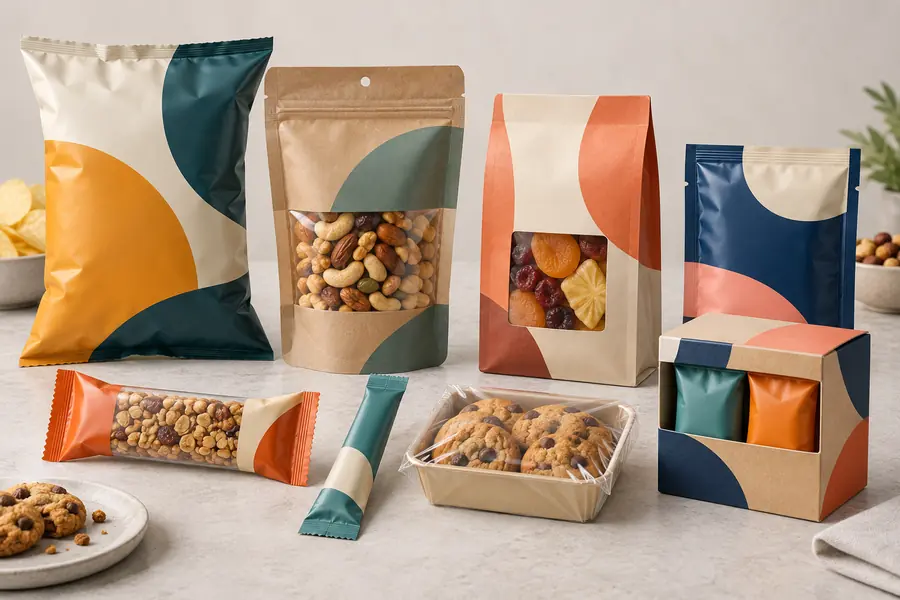
The main types of snack packaging include pillow bags, stand-up pouches, 3-side seal pouches, gusset bags, flat bottom bags, flow wraps, stick packs, sachets, trays, tubs, cartons, and multipacks. I choose among them based on snack texture, fat content, moisture sensitivity, shelf life, serving size, filling equipment, and retail requirements.
I do not consider the package shape alone. Chips, nuts, cookies, dried fruit, candy, jerky, popcorn, and snack bars behave differently after packing. The film barrier, sealing method, headspace, gas flushing, reclosure system, and physical protection can matter as much as whether the package stands upright.
What Are the Most Common Types of Snack Packaging?
I usually divide snack packaging into flexible bags and pouches, wrapped formats, portion packs, and rigid or semi-rigid containers. Each category solves a different packaging problem.
The most common flexible snack formats are pillow bags, stand-up pouches, gusset bags, 3-side seal pouches, and flow wraps. Snack brands also use stick packs, sachets, tubs, trays, boxes, and bag-in-box systems. Flexible formats dominate many dry snacks because they combine low weight, heat sealing, printability, and efficient high-speed production.
Pillow Bags
A pillow bag is one of the formats I see most often for high-volume snacks.
The package has a back seal and sealed top and bottom edges. When filled, it forms the familiar pillow-like shape used for many chips and salty snacks.
I often consider pillow bags for:
- Potato chips
- Tortilla chips
- Popcorn
- Extruded snacks
- Crackers
- Candy
- Small snack mixes
Pillow bags work especially well with vertical form-fill-seal equipment.
A printed roll of film enters the machine. The equipment forms it into a tube, fills the snack, and creates the final seals.
This process can be fast and material-efficient.
The package also leaves room for headspace, which can be useful for fragile snacks. Headspace should not automatically be treated as wasted space because it can help reduce crushing when it is part of the packaging design.
Stand-Up Pouches
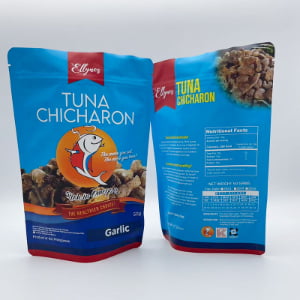
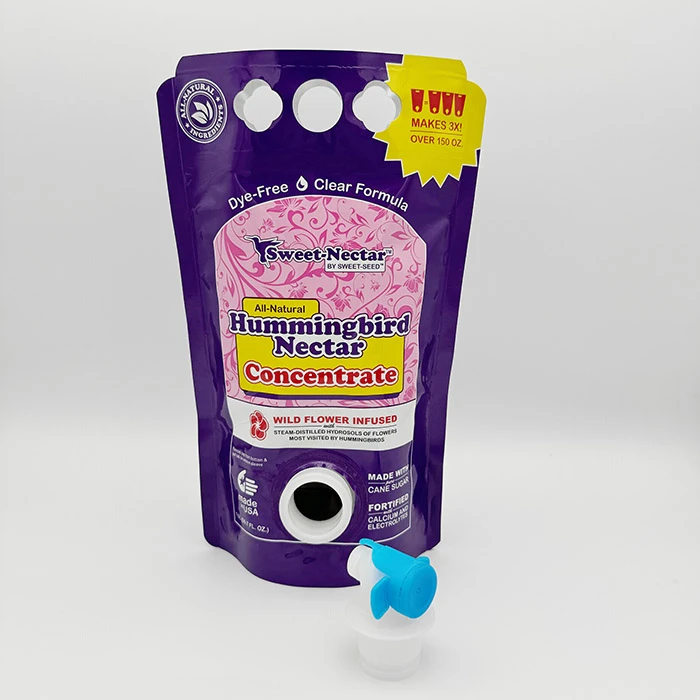
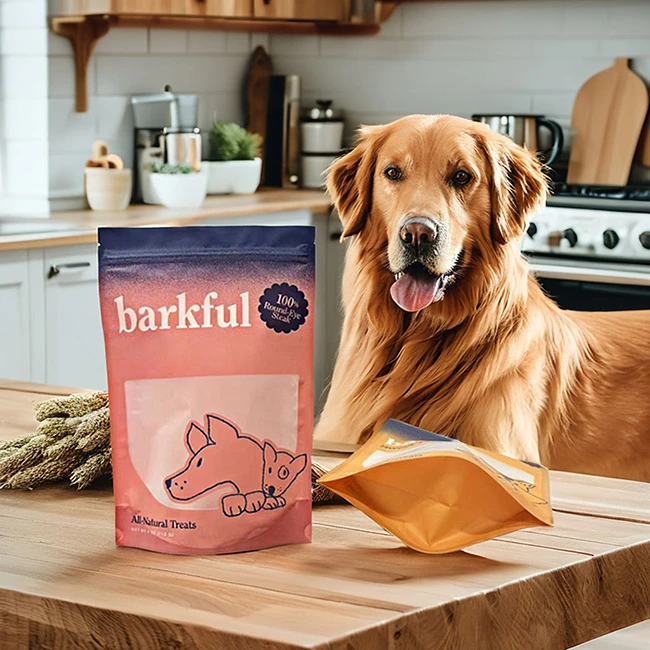
I choose stand-up pouches when shelf presentation and reclosure are important.
The bottom gusset expands after filling, allowing the bag to stand on a shelf.
Common applications include:
- Nuts
- Dried fruit
- Granola
- Trail mix
- Candy
- Jerky
- Premium chips
- Protein snacks
- Snack mixes
I can add a press-to-close zipper, tear notch, window, or other convenience feature.
Commercial snack packaging ranges currently include stand-up pouches alongside pillow bags, gusset bags, flow wraps, and reclosable formats.
3-Side Seal Pouches
A 3-side seal pouch is a simple flat package.
Three edges are normally sealed before filling, and the final open edge is sealed afterward.
I use this format for:
- Snack samples
- Small nut portions
- Dried fruit
- Jerky
- Confectionery
- Promotional packs
The structure stores flat and can be economical when a standing base adds little value.
Gusset Bags
A gusset bag expands at the sides or bottom.
This extra volume helps package larger quantities without making the front panel excessively wide.
I may consider gusset bags for:
- Large nut packs
- Popcorn
- Bulk snacks
- Family-size products
- Premium confectionery
Amcor's current snacks and confectionery portfolio lists gusset bags as one of its standard flexible formats.
My Basic Format Comparison
| Snack Packaging Type | Typical Use | Main Advantage |
|---|---|---|
| Pillow bag | Chips, popcorn, candy | Fast, economical production |
| Stand-up pouch | Nuts, dried fruit, jerky | Shelf presence and reclosure |
| 3-side seal pouch | Samples, portions | Simple and compact |
| Gusset bag | Family-size snacks | Higher internal capacity |
| Flat bottom bag | Premium snacks | Strong shelf stability |
| Flow wrap | Bars, cookies | Tight individual wrapping |
| Stick pack | Powders, small portions | Portion control |
| Sachet | Samples, seasonings | Compact single-use pack |
| Tub/tray | Fragile snacks | Mechanical protection |
| Carton/multipack | Grouped products | Secondary protection |
I use the format to solve handling and merchandising needs. I use the material structure to solve freshness and shelf-life needs.
Which Snack Packaging Is Best for Chips, Nuts, Cookies, and Dried Fruit?
I do not use one pouch specification for every snack because the main causes of quality loss are different.
I generally use pillow bags with protective headspace for chips, high-barrier resealable pouches for nuts, flow wrap or trays for cookies, and moisture-resistant zipper pouches for dried fruit. The best package depends on whether the product is most sensitive to crushing, oxygen, moisture, aroma loss, grease, or repeated consumer opening.
Chips and Crispy Snacks
Chips need to remain crisp.
Moisture entering the package can quickly change their texture. Their oils can also be affected by oxygen during storage.
I therefore consider:
- Strong moisture barrier
- Useful oxygen barrier
- Reliable seals
- Suitable headspace
- Nitrogen flushing where appropriate
- Film with good puncture resistance
Pillow bags work well because they can be produced quickly and provide useful internal volume.
I may also use metallized film when the product needs additional oxygen and light protection.
For premium or resealable chip products, a stand-up pouch can also work.
Nuts and Trail Mix
Nuts create a different problem.
Their natural oils can oxidize, which can lead to rancid flavors.
I normally prioritize oxygen barrier more strongly for nuts than for some simple carbohydrate-based dry snacks.
I may choose:
- Metallized stand-up pouch
- Foil laminate
- Transparent high-barrier pouch
- Nitrogen-flushed pouch
- Zipper pouch for multi-serving packs
High-barrier snack films are specifically designed around oxygen protection and flavor preservation, including structures suitable for MAP applications.
If the package contains both nuts and dried fruit, I need to balance two sets of requirements.
The nuts benefit from oxygen protection.
The dried fruit also needs careful moisture control.
Cookies and Biscuits
Cookies can be sensitive to moisture gain.
A crisp cookie can become soft if it absorbs water from humid air.
However, cookies are also fragile.
I may therefore use:
- Flow wrap
- Pillow pack
- Tray + overwrap
- Rigid tub
- Barrier pouch
Flow wrapping is particularly useful for individual bars and cookies because the film can closely surround the product while running efficiently on high-speed equipment. Amcor includes flow wrap among its current snack and confectionery formats.
Dried Fruit
For dried fruit, I generally focus on moisture control and resealability.
A stand-up zipper pouch is often practical because consumers may eat the product over several days.
I may use:
- Clear barrier pouch
- Metallized pouch
- Stand-up zipper pouch
- 3-side seal pouch for smaller portions
The correct barrier depends on whether the fruit is chewy, conventionally dried, or freeze-dried.
Freeze-dried snacks usually need much stronger moisture protection than chewy dried mango or raisins.
What Materials Are Used for Snack Packaging?
I treat snack packaging material as a functional structure rather than just a printed plastic film.
Snack packaging commonly uses PE, PP, BOPP, PET, metallized films, aluminum foil, paper, and multilayer laminates. I choose the structure according to oxygen barrier, moisture barrier, grease resistance, seal strength, puncture resistance, printing needs, and production speed. Newer recycle-ready PE- or PP-based structures are also available for selected snack applications.
BOPP Is Common in Snack Packaging
BOPP means biaxially oriented polypropylene.
I often see it in snack applications because it can provide:
- Good clarity
- Good stiffness
- Strong printing performance
- Useful moisture resistance
- Fast machine performance
It can also be metallized to increase barrier performance.
A simple clear snack structure may be suitable for products with modest shelf-life requirements.
A metallized structure can improve protection for oxygen-sensitive or light-sensitive snacks.
PET Adds Strength and Printing Performance
PET is commonly used as an outer layer in laminated snack packaging.
It can provide:
- Mechanical strength
- Heat resistance
- Print quality
- Dimensional stability
A common laminate might combine an outer PET layer with a barrier layer and an inner PE sealant.
PE Often Provides the Sealant Layer
Polyethylene is widely used because it can form reliable heat seals.
It may appear as:
- LDPE
- LLDPE
- Engineered PE sealant films
- PE-dominant recycle-ready structures
The FDA treats packaging components as food-contact substances or materials whose regulatory status must be appropriate for the intended food and conditions of use. Snack products can fall into dry-solid categories with or without free surface oil or fat, which can affect material suitability.
Metallized Films Increase Barrier Performance
I use metallized films when I need stronger protection from oxygen and light.
They are common for:
- Chips
- Nuts
- Popcorn
- Chocolate
- Protein snacks
- Premium crackers
High-barrier metallized films can combine aroma protection, oxygen barrier, and high-speed sealing performance.
Recycle-Ready Materials Are Expanding
Snack packaging is gradually moving toward simpler structures that can be easier to recycle in suitable collection systems.
Amcor currently offers recycle-ready snack and confectionery structures in pillow, stand-up, gusset, flow-wrap, and other formats.
I still evaluate performance before changing materials.
A packaging structure needs to maintain:
- Seal strength
- Barrier
- Machine speed
- Product freshness
- Printing quality
I do not consider a material improvement successful if the snack reaches consumers stale, broken, or oxidized.
How Are Different Snack Packages Sealed?
Sealing is critical because even a high-barrier film cannot protect the snack when air or moisture enters through a weak closure.
Most flexible snack bags use heat sealing. Pillow bags and flow wraps are usually sealed automatically on form-fill-seal equipment, while premade stand-up and 3-side seal pouches are sealed after filling. Multi-serving pouches can also include zippers, but I normally treat the zipper as a consumer reclosure rather than the original hermetic seal.
Heat Sealing Is the Main Method
Flexible snack films normally include a heat-sealable layer.
Packaging jaws apply a controlled combination of:
- Heat
- Pressure
- Time
The sealant layers bond together.
I commonly use heat seals on:
- Pillow bags
- Stand-up pouches
- 3-side seal bags
- Gusset bags
- Flow wraps
- Stick packs
- Sachets
For high-speed production, hot-tack performance is important.
The seal may experience product weight or machine stress almost immediately after it is formed. Snack films therefore need a useful sealing window and enough hot strength to survive production. Current high-barrier snack film systems specifically emphasize low seal-initiation temperature and hot-tack performance for fast form-fill-seal operations.
Zippers Are Useful for Multi-Serving Snacks
I often add zippers to:
- Nuts
- Trail mix
- Dried fruit
- Jerky
- Granola
- Candy
The package is usually heat sealed above the zipper before sale.
The consumer opens the permanent seal and then uses the zipper.
This helps maintain convenience after first opening.
Flow Wrap Works Well for Individual Snacks
Flow wrapping uses rollstock film.
The machine wraps the film around the product and creates a longitudinal seal plus end seals.
I commonly consider it for:
- Granola bars
- Protein bars
- Cookies
- Candy bars
- Bakery snacks
- Sandwich-style snacks
ProAmpac also offers snack-oriented flow-wrap structures and describes formats designed to work with both horizontal and vertical form-fill-seal production.
MAP and Nitrogen Flushing Can Add Another Layer of Protection
Modified atmosphere packaging changes the gas composition inside a package.
For dry snacks, nitrogen is often used to reduce oxygen and provide some cushioning.
The FDA defines modified-atmosphere packaging as packaging in which the internal atmosphere differs from normal air and may change over time because of packaging permeability or food behavior.
I still need a suitable barrier film.
If oxygen can quickly enter through the film or seals, the benefits of gas flushing will not last.
How Do I Choose the Right Type of Snack Packaging?
I find that the right package becomes easier to select when I start with the snack rather than with the pouch catalog.
I choose snack packaging by evaluating product texture, oil content, moisture sensitivity, serving size, shelf-life target, sales channel, filling speed, consumer reclosure needs, and distribution conditions. I then select the bag format, barrier level, sealant, closure, and secondary packaging as one system rather than making each decision separately.
I First Identify What Can Damage the Snack
For chips, the main concerns may be moisture, oxidation, and crushing.
For nuts, I focus heavily on oxygen and fat oxidation.
For cookies, I think about moisture gain and breakage.
For dried fruit, I think about moisture balance.
For jerky, I may need moisture, oxygen, and microbial control.
This first step determines the barrier priorities.
I Then Consider Portion Size
Single-use packaging can be simple.
I may select:
- Pillow bag
- Sachet
- Stick pack
- Small flow wrap
- 3-side seal pouch
A multi-serving snack benefits more from reclosure.
I then consider a stand-up pouch or another zipper format.
ProAmpac's snack reclosure systems illustrate how resealable features can be combined with high-barrier clear or metallized films for portable and multi-use snack applications.
I Match Packaging to the Filling Line
A package that cannot run efficiently on the available machine can create significant costs.
I ask:
- Is the product packed by VFFS?
- Is HFFS required?
- Are premade pouches filled?
- What is the target bags-per-minute rate?
- Can the seal jaws handle the film?
- Does the product contaminate the sealing zone?
A pillow bag may be ideal for a high-volume chip line.
A premade stand-up pouch may be better for a premium nut product with several SKUs.
My Practical Snack Packaging Guide
| Snack | Packaging I Usually Consider |
|---|---|
| Potato chips | Pillow bag + barrier film |
| Tortilla chips | Pillow bag |
| Popcorn | Pillow or gusset bag |
| Nuts | High-barrier zipper pouch |
| Trail mix | Stand-up zipper pouch |
| Dried fruit | Moisture-barrier zipper pouch |
| Freeze-dried fruit | Very high moisture-barrier pouch |
| Jerky | High-barrier stand-up or flat pouch |
| Cookies | Flow wrap, tray, or barrier pouch |
| Protein bar | Flow wrap |
| Candy | Pillow bag, stand-up pouch, or flow wrap |
| Seasoning snack pack | Sachet |
| Powdered snack mix | Stick pack or pouch |
| Premium mixed snacks | Flat bottom or stand-up pouch |
| Family-size snacks | Gusset or large pillow bag |
I use this table as a starting point rather than a fixed rule.
My Insights: What Are the Different Types of Snack Packaging
I think the most useful way to understand snack packaging is to separate package shape from packaging performance.
The different types of snack packaging include pillow bags, stand-up pouches, gusset bags, flat and 3-side seal pouches, flow wraps, sachets, stick packs, rigid containers, and multipacks. I choose between them by matching the product's barrier, protection, serving-size, filling, retail, and consumer-use requirements instead of choosing a format only by appearance.
I Think Pillow Bags Remain Important Because Efficiency Matters
Stand-up pouches often receive more attention because they look premium.
However, I would not replace pillow packaging automatically.
For high-volume chips, popcorn, and extruded snacks, pillow bags can provide a very efficient combination of:
- High-speed filling
- Low material use
- Large print area
- Headspace
- Reliable heat sealing
Current snack packaging ranges still include pillow bags alongside newer premium formats, which shows that the structure remains commercially useful.
I Think Stand-Up Pouches Are Best When Reclosure Adds Real Value
A zipper makes sense when consumers eat the product over several occasions.
That is why I like stand-up pouches for:
- Nuts
- Dried fruit
- Jerky
- Trail mix
- Premium candy
For a 30 g single-serving chip bag, a zipper may add cost without adding much consumer value.
I therefore connect package features directly with eating behavior.
I Think Fragility Should Influence Headspace
Consumers sometimes view a partially filled chip bag as excessive empty space.
From a packaging perspective, some gas-filled headspace can serve a useful purpose.
It can reduce direct compression during handling.
For fragile chips and crackers, I consider mechanical protection alongside barrier protection.
A perfectly oxygen-resistant package is still a poor package if the consumer receives only broken crumbs.
I Think Snack Packaging Should Be Viewed as a System
I do not ask only:
Which pouch should I use?
I ask:
Which pouch + film + gas environment + seal + filling process + case pack will protect the product at the lowest practical total cost?
That changes the packaging decision.
For example, a premium stand-up pouch may cost more per unit but improve display and provide resealability.
A pillow bag may be cheaper and faster to manufacture.
A tray may add material but prevent expensive cookie breakage.
The correct answer depends on total performance.
I Think Recyclability Must Be Matched With Shelf Life
Recycle-ready snack structures are expanding across pillow bags, stand-up pouches, gusset bags, and flow wraps.
I see this as an important direction.
However, I still need to verify:
- Oxygen barrier
- Moisture barrier
- Grease resistance
- Seal strength
- Machine speed
- Local recycling availability
Snack packaging often protects foods with a relatively low product weight compared with their retail value.
If weaker packaging creates staling or food waste, the material change may not achieve its intended result.
My Final Snack Packaging Decision Framework
| If My Priority Is... | Format I Consider First |
|---|---|
| Lowest-complexity high-speed packing | Pillow bag |
| Premium shelf presence | Stand-up pouch |
| Resealable multi-serving snack | Stand-up zipper pouch |
| Small sample | 3-side seal pouch |
| Large family-size snack | Gusset bag |
| Premium structured package | Flat bottom bag |
| Individual bar | Flow wrap |
| Powder portion | Stick pack |
| Single-use seasoning | Sachet |
| Fragile cookie | Tray + wrap |
| Strong product visibility | Clear high-barrier pouch |
| Oxygen-sensitive nuts | Metallized/high-barrier pouch |
| Recycling-oriented flexible pack | Qualified mono-material structure |
For me, there is no single “best” snack package.
The best structure for chips may be a pillow bag.
The best package for nuts may be a high-barrier stand-up zipper pouch.
The best package for a protein bar may be flow wrap.
The best package for a sample may be a small flat pouch.
What matters is matching the format to the product and then designing the barrier, seal, and filling process around that choice.
Conclusion
I choose snack packaging from pillow bags, pouches, flow wraps, sachets, gusset bags, trays, and multipacks according to freshness, fragility, serving size, production speed, and consumer convenience.