
](https://www.sglpackaging.com/wp-content/uploads/2026/09/Shaped-Pouches-Packaging-New-Trends-in-Packaging-Industry.webp "Shaped Pouches Packaging – New Trends in Packaging Industry 1")
I see flexible packaging becoming more competitive as brands look for ways to stand out without moving back to heavy bottles, jars, boxes, or other rigid formats.
Shaped pouch packaging is becoming an important flexible packaging trend because it combines custom die-cut silhouettes with lightweight materials, strong printing, and functional closures. Current developments include recyclable mono-material structures, spouts, digital printing, short-run customization, ergonomic shapes, smart packaging, and designs created for both retail shelves and online marketing.
I no longer see a shaped pouch as simply an unusual bag. I see it as a packaging platform where structure, graphics, material, closure, and consumer interaction can work together. A fruit shape can communicate flavor. A bottle silhouette can suggest a liquid product. A custom brand outline can make the pack recognizable before a consumer even reads the label.
What Is Shaped Pouch Packaging?
The basic idea is simple, but I think the manufacturing details explain why this format offers more possibilities than a standard rectangular pouch.
Shaped pouch packaging uses flexible film that is sealed and precision die-cut into a customized outer contour instead of a conventional square or rectangular profile. I can develop the structure from stand-up pouches, flat pouches, three-side seal bags, or spout pouches while adding features such as zippers, handles, tear notches, windows, or hanging holes.
I Treat the Shape as Part of the Package Structure
A shaped pouch usually starts with familiar flexible packaging materials.
Depending on the product, I may consider PET/PE, BOPP/CPP, metallized laminates, foil laminates, mono-PE, mono-PP, or other structures. The package is then printed, laminated where required, sealed, and cut according to the approved contour.
The die-cutting stage makes the format different.
A standard pouch uses relatively predictable straight edges. A shaped package can have:
- Rounded shoulders
- Bottle outlines
- Fruit silhouettes
- Animal shapes
- Character profiles
- Brand-symbol contours
- Narrow grip sections
- Curved tops
- Irregular side edges
The seal still needs enough width around those areas. A sharp curve or narrow neck may look attractive in artwork but create problems with sealing or filling.
This is why I think shaped pouch design requires cooperation between packaging engineers and designers earlier than many standard pouch projects.
| Design Element | What I Check |
|---|---|
| Outer contour | Brand connection and recognizability |
| Seal path | Enough width for reliable sealing |
| Filling opening | Compatible with the product and machine |
| Material | Barrier, strength, and sealing performance |
| Die cutting | Repeatability and edge accuracy |
| Printing | Registration around curves and cut lines |
| Closure | Zipper, spout, tear notch, or other feature |
| Finished shape | Stability after actual filling |
The most successful shaped pouch is not simply the most complicated design. I usually prefer a clear shape that consumers understand quickly and manufacturers can reproduce consistently.
Why Are Shaped Pouches Becoming a Packaging Trend?
I think traditional printing alone is becoming less effective as more products use professionally designed flexible packaging.
Shaped pouches are gaining attention because the physical silhouette creates another layer of brand differentiation. A pouch can resemble a product, ingredient, mascot, bottle, or recognizable brand element. This makes the package easier to distinguish on crowded retail shelves and can also create a stronger visual identity in e-commerce images and promotional campaigns.
Shape Is Becoming Part of Branding
Most conventional pouches still begin with the same visual outline.
A brand can change:
- Color
- Typography
- Photography
- Illustration
- Matte or gloss finishing
- Metallic effects
However, the rectangular silhouette often remains unchanged.
A shaped pouch changes the package before I even consider the artwork.
If I develop a strawberry-shaped pouch for fruit snacks, a bone-shaped pouch for pet treats, or a bottle-shaped spouted pouch for a beverage, the structure itself begins communicating the product category.
I think this is particularly useful when consumers make fast purchase decisions.
The package does not need to explain everything through text. The shape can provide the first visual clue.
Social Media and E-Commerce Change the Value of Shape
I also think online selling changes the discussion.
Packaging is no longer viewed only from two meters away on a supermarket shelf.
Consumers now see product thumbnails, social media videos, unboxing content, influencer posts, and brand photography.
A distinctive contour can remain recognizable even when the image is small.
This makes shaped pouch packaging useful beyond physical retail. It can become part of a brand's visual assets across several channels.
I would still not assume that an unusual shape automatically improves sales. Product quality, pricing, positioning, distribution, and artwork still matter.
The shape gives me another branding tool. It does not replace the rest of the marketing strategy.
How Are Sustainable Materials Changing Shaped Pouches?
I consider material redesign one of the most important recent developments because shaped packaging historically relied heavily on conventional multi-material laminates.
One major trend is the development of mono-material shaped pouches made primarily from PE or PP. These structures aim to keep the custom shape, printing, sealing, and barrier functions while improving compatibility with flexible-plastic recycling systems where suitable collection and recycling facilities exist.
Mono-Material Pouches Are Moving Into More Complex Formats
Mono-material packaging is not limited to simple flat bags anymore.
Mondi currently offers mono-material shaped pouch formats designed around PE or PP structures and also offers mono-material spouted pouches for applications including fruit puree, yogurt, baby food, liquid soap, and detergents.
I think this matters because shaped packaging can be more technically demanding than a basic rectangular pouch.
The material may need to:
- Hold the die-cut contour
- Seal reliably around curved edges
- Provide oxygen or moisture barrier
- Work with a zipper or spout
- Maintain print quality
- Run on production equipment
- Meet product shelf-life requirements
Moving these functions into a mono-material structure requires more engineering than simply replacing one layer.
Digital Printing Is Now Connecting With Mono-Material Development
Another trend I watch is the combination of recyclable flexible materials with digital printing.
In 2026, a high-barrier mono-PP pouch project shown at interpack combined digitally printed PP with a mono-material film structure. That type of development shows how printing technology and material redesign are increasingly being developed together rather than separately.
For shaped pouches, this can be especially useful.
Brands often use custom shapes for:
- New products
- Seasonal launches
- Limited editions
- Multiple flavors
- Promotional collaborations
These projects may not always need the very large volumes traditionally associated with gravure printing.
Digital printing can therefore make shape customization more practical for smaller or more frequently changing product ranges.
I Still Check the Recycling Market
I do not describe every mono-material pouch as universally recyclable.
Recycling systems vary by country and region.
The zipper, spout, inks, adhesives, coatings, and barrier technologies can also affect the complete packaging design.
For me, the better approach is to say that a package is designed for recycling according to a specific system or guideline when that claim can be supported.
That is more useful than treating “recyclable” as a universal label.
How Are Spouts, Zippers, and Functional Shapes Changing the Market?
I think the next stage of shaped pouch development is moving from visual novelty toward functional design.
Modern shaped pouches increasingly combine custom contours with spouts, zippers, handles, tear notches, windows, and stand-up bases. This allows the shape to support handling, opening, pouring, or resealing instead of serving only as decoration.
Spouted Shaped Pouches Are Expanding Liquid Applications
Spout pouches are one of the clearest examples.
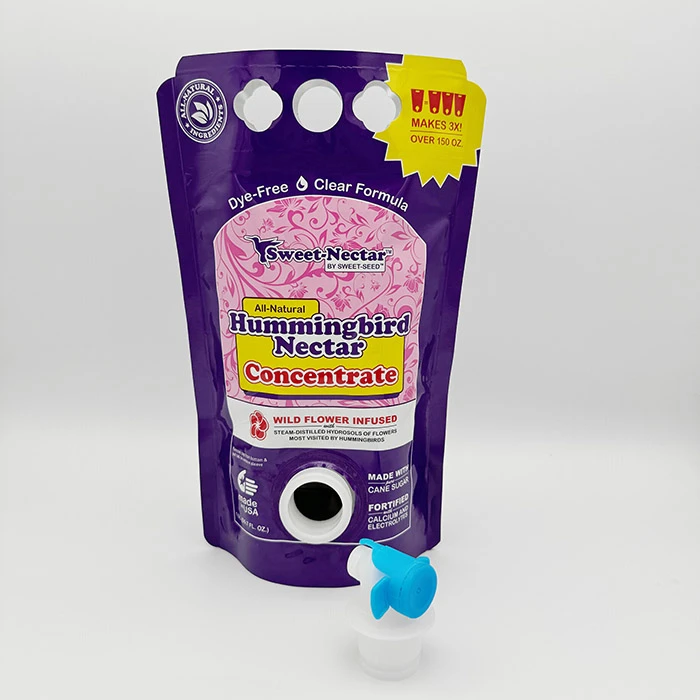
A flexible package can use a bottle-inspired silhouette while adding a corner or center spout.
I consider this type of packaging for:
- Fruit puree
- Baby food
- Yogurt
- Energy gels
- Sauces
- Beverages
- Liquid soap
- Detergent
- Refill products
Mono-material spouted pouch technology is now available for ambient filling, hot filling, pasteurization, and even certain retort applications, depending on the specific construction.
That expands the role of flexible packaging.
Instead of imitating a bottle only visually, the pouch can begin replacing some of the bottle's functional role.
Ergonomic Shapes Can Improve Consumer Use
I also see greater interest in shape as an ergonomic feature.
A narrow side area can create a grip.
Rounded edges can improve handling.
A controlled neck can guide a liquid toward a spout.
A custom tear area can make single-use packaging easier to open.
This changes the design question.
I no longer ask only:
Will this shape stand out?
I also ask:
Will this shape make the product easier to use?
When I can answer yes to both questions, I think the custom structure becomes easier to justify commercially.
How Is Digital Printing Affecting Custom Shaped Pouches?
I think digital printing can change how brands use custom packaging because it reduces the need to treat every package design as a long-term, high-volume commitment.
Digital printing supports shorter production runs, multiple artwork versions, faster design changes, and customized graphics without the same plate or cylinder requirements as traditional printing methods. For shaped pouch projects, this can make seasonal packaging, market tests, limited editions, and multi-SKU launches more practical.
I See More Opportunity for Product Testing
A custom shape traditionally requires tooling.
That part does not disappear.
However, if the artwork can change without creating a full new set of printing cylinders, a brand can test more variations around the same pouch shape.
For example, one shape could support:
- Four flavors
- Several regional versions
- Holiday artwork
- Promotional editions
- Different languages
- Small product launches
This can be useful for brands that want differentiation but do not want to commit immediately to very large production volumes.
Gravure Still Makes Sense at Scale
I do not think digital printing replaces gravure in every project.
For large repeat orders, rotogravure can still provide strong print consistency and attractive unit economics.
I usually think about the printing decision like this:
| Project | Printing Direction I May Consider |
|---|---|
| Product trial | Digital printing |
| Multiple small SKUs | Digital printing |
| Seasonal promotion | Digital printing |
| Fast artwork changes | Digital printing |
| Large repeat orders | Gravure |
| Very high volume | Gravure |
| Long-running design | Gravure |
| Premium multi-color graphics | Either, depending on specification |
The growing trend is not one printing method replacing the other.
It is brands having more production choices.
Which Industries Are Using Shaped Pouches Most?
I see shaped pouch growth concentrated in categories where visual identity, convenience, and product interaction are particularly important.
Shaped pouches are widely used for children's foods, candy, snacks, beverages, baby food, energy products, pet treats, cosmetics, personal-care samples, household products, and seasonal promotions. These categories benefit because the package shape can communicate the product or brand while still supporting flexible packaging functions.
Food and Confectionery
Food brands can connect the package directly with ingredients.
I can use fruit, candy, bottle, character, or other familiar shapes.
For children's products, simple animal or character silhouettes can make the package easier to recognize.
For confectionery and seasonal products, custom shapes can also create a gift-like appearance.
Pet Food and Treats
Pet packaging is another natural category.
A bone, paw, fish, or animal-inspired pouch communicates quickly.
A zipper can also turn the package into a multi-use container.
This allows the brand to combine visual recognition with convenience.
Beauty and Personal Care
Small sample packaging is another strong application.
I see opportunities for:
- Facial mask essences
- Shampoo samples
- Cream
- Serum
- Lotion
- Hand masks
- Foot masks
- Promotional beauty products
A drop, leaf, bottle, hand, or product-inspired contour can make a small sachet more distinctive.
Seasonal and Promotional Packaging
I think short-term promotions are particularly compatible with shaped pouch concepts.
The pouch can become part of the campaign.
A brand can develop packaging for:
- Holidays
- Events
- Licensed characters
- Collaborations
- Gift sets
- Product launches
- Trade-show samples
This is also where digital printing and custom shape design can work together particularly well.
My Insights: Shaped Pouches Packaging – New Trends in Packaging Industry
I think the most important change is that shaped pouches are moving from being treated as novelty packaging toward becoming engineered brand and product platforms.
The new trend in shaped pouch packaging is not simply creating increasingly unusual silhouettes. I see the industry moving toward shapes that combine recognizable branding, recyclable mono-materials, shorter customized print runs, functional closures, ergonomic handling, stronger e-commerce presentation, and product-specific barrier performance in one flexible structure.
I Think Simple Shapes Will Outperform Unnecessary Complexity
Custom packaging technology can create very complicated outlines.
That does not mean brands should use them.
I usually prefer a shape that can be understood in one second.
A bottle, fruit, bone, leaf, drop, or simple brand symbol can create strong recognition.
Highly detailed silhouettes create more narrow areas and curves. These can increase die complexity, reduce seal space, increase material waste, and make filling more difficult.
The future of shaped packaging, in my view, is not maximum complexity.
It is maximum recognition with practical geometry.
Sustainability Will Influence the Shape Itself
I also think sustainability will move beyond simply changing the laminate.
Material efficiency will influence structural design.
A shape that creates excessive trim waste may be difficult to defend even if the film itself is technically recyclable.
Packaging developers will increasingly need to consider:
- Mono-PE or mono-PP options
- Material thickness
- Die-cut waste
- Recyclable zipper compatibility
- Spout compatibility
- Barrier requirements
- PCR options where appropriate
- Shipping efficiency
The World Packaging Organisation's 2026 trend summary highlights mono-material flexible packaging, refill systems, structural optimization, digital packaging, QR codes, and traceability among major packaging innovation areas.
I think shaped pouch development will increasingly connect with all of these trends.
Smart Packaging Can Turn the Pouch Into a Digital Touchpoint
QR codes and connected packaging also fit naturally with custom shapes.
The physical silhouette can attract attention first.
The printed code can then connect the consumer with:
- Product information
- Traceability
- Instructions
- Recipes
- Loyalty programs
- Authentication
- Recycling guidance
- Brand content
Smart and connected packaging is identified as an important 2026 packaging direction, particularly as packaging becomes a carrier of data and consumer interaction.
For me, this creates a useful combination.
Shape attracts attention. Digital information continues the interaction.
Shaped Pouches Will Become More Application-Specific
I also expect fewer generic “creative pouch” projects and more shapes engineered around a specific product.
A baby food pouch may focus on grip and controlled dispensing.
An energy gel pouch may focus on easy opening and portability.
A pet treat pouch may focus on shelf recognition and resealability.
A cosmetic sample may focus on visual form and a controlled tear point.
A refill pouch may focus on pouring and material efficiency.
This is more valuable than adding a decorative curve without considering how the consumer uses the package.
My Practical View of the New Trends
| Emerging Trend | What It Means for Shaped Pouches |
|---|---|
| Mono-material PE/PP | Custom shapes can move toward recycling-oriented structures |
| High-barrier mono-materials | More sensitive products may move away from some conventional laminates |
| Digital printing | Shorter runs and multiple artwork versions become easier |
| Spouted designs | Shaped pouches expand further into liquids and refills |
| Ergonomic structures | Shape can improve grip, opening, and pouring |
| Smart packaging | QR codes connect physical packaging with digital information |
| E-commerce design | Silhouettes need to work in thumbnails and social content |
| Premium finishes | Matte, gloss, metallic, and tactile effects strengthen positioning |
| Functional customization | Zippers, windows, handles, and spouts become part of shape design |
| Structural optimization | Brands need to balance visual impact with film use and production efficiency |
I therefore do not think the future of shaped pouch packaging is simply “more shapes.”
The direction is much more practical.
Brands want packaging that looks different, but they also want it to run efficiently, protect the product, support recycling goals, work across different sales channels, and provide a useful consumer experience.
I see the best future shaped pouch designs combining these requirements instead of treating them separately.
A distinctive contour can attract attention.
A mono-material structure can support a recycling-oriented packaging strategy.
Digital printing can make product variants easier to launch.
A zipper or spout can improve use.
A QR code can extend the package into digital communication.
When all of these elements support the same product strategy, shaped pouch packaging becomes much more than a visual trend.
It becomes a flexible packaging system designed around how modern brands manufacture, sell, communicate, and compete.
Conclusion
I see shaped pouch packaging moving toward recyclable materials, functional contours, digital customization, smarter consumer interaction, and stronger online visibility while keeping the core advantage that made it popular: immediate visual differentiation.