
](https://www.sglpackaging.com/wp-content/uploads/2026/09/What-Are-Stand-Up-Pouches-Used-For.webp "What Are Stand-Up Pouches Used For? 1")
I often see brands choose stand-up pouches because one flexible package can handle very different products while still giving the finished product a strong retail presence.
Stand-up pouches are used for snacks, coffee, tea, pet food, supplements, powders, dried fruit, candy, baby food, sauces, ready meals, household products, and personal-care products. Their expandable bottom gusset lets them stand upright, while zippers, spouts, valves, and high-barrier films can adapt the pouch to different products.
I do not see a stand-up pouch as one fixed type of bag. I see it as a flexible packaging platform. I can change the size, material, barrier level, closure, bottom design, and printing according to the product. This flexibility is why the same general pouch format can work for dry snacks, fresh coffee, pet treats, liquid food, and even household products.
What Food Products Are Stand-Up Pouches Used For?
Food is one of the largest application areas I consider because stand-up pouches combine product protection with a front-facing retail package.
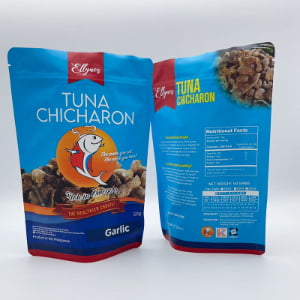
Stand-up pouches are widely used for nuts, dried fruit, granola, cereal, candy, snacks, spices, powders, specialty foods, and other dry products. I usually choose them when the product benefits from an upright display, a resealable closure, or a flexible barrier structure that can help manage moisture, oxygen, aroma, or other shelf-life requirements.
Snacks, Nuts, and Dried Foods
I frequently consider stand-up pouches for snacks because consumers often use the product more than once.
A zipper can make a major difference for products such as:
- Nuts
- Trail mix
- Granola
- Dried fruit
- Candy
- Cookies
- Snack mixes
- Cereals
The consumer can open the pouch, remove part of the food, and close it again.
I still separate the zipper from the main barrier structure. A zipper supports convenience after first opening, but the laminated film and original heat seals provide much of the package's primary product protection.
For moisture-sensitive snacks, I look at moisture barrier. For products containing oils, I also consider oxygen and grease resistance. For sharp products such as nuts or hard snack pieces, I may need better puncture strength.
Powders and Dry Mixes
Stand-up pouches also work well for products such as protein powders, drink mixes, flour-based mixes, nutritional powders, and specialty ingredients.
I particularly like the structure when consumers need to scoop or pour product from the package several times.
However, powders create a sealing challenge.
Fine particles can enter the zipper or top seal area during filling. If powder sits between film surfaces during heat sealing, seal quality may drop.
This is why I consider the filling process along with the pouch.
| Food Type | Feature I Often Consider |
|---|---|
| Nuts | Zipper and moisture barrier |
| Dried fruit | Resealability |
| Granola | Zipper and large front printing area |
| Candy | Clear window or high-impact graphics |
| Protein powder | Wide opening and strong zipper |
| Dry mixes | Moisture protection |
| Specialty snacks | Barrier film and premium printing |
I normally size the pouch from actual product volume rather than net weight alone. Two products with the same weight can have very different densities and therefore need different gusset depths and pouch dimensions.
Why Are Stand-Up Pouches Popular for Coffee and Tea?
Coffee is one of the clearest examples of a product where the pouch can combine branding, barrier protection, and consumer convenience.
Stand-up pouches are commonly used for coffee and tea because they provide a large printable surface, can support resealable zippers, and can use high-barrier film structures. Coffee pouches can also include one-way degassing valves when appropriate, allowing gases from freshly roasted coffee to escape while helping protect the product from outside air.
Coffee Needs More Than an Attractive Bag
When I develop coffee packaging, I look beyond the standing shape.
Roasted coffee can be sensitive to oxygen, moisture, light, and aroma loss. The material structure therefore matters greatly.
I may consider:
- High-barrier laminates
- Metallized structures
- Foil-based structures
- Engineered recyclable barrier structures
- Resealable zippers
- One-way degassing valves
- Tear notches
The correct combination depends on the coffee, filling conditions, shelf-life target, and distribution system.
I do not assume that every coffee pouch needs exactly the same barrier.
Tea Also Benefits From Aroma and Moisture Protection
Tea can also work well in stand-up pouches, particularly when it is sold as loose-leaf tea or in larger quantities.
The upright format gives the brand room for:
- Origin information
- Brewing instructions
- Flavor notes
- Product stories
- Certifications
- Brand graphics
A zipper can help consumers keep the pouch closed between uses.
For me, this is where stand-up packaging becomes more than a container. It becomes part of the product presentation and daily consumer experience.
Are Stand-Up Pouches Used for Pet Food and Pet Treats?
I see pet food as another major market because the pouch format works well with both repeated use and strong retail branding.
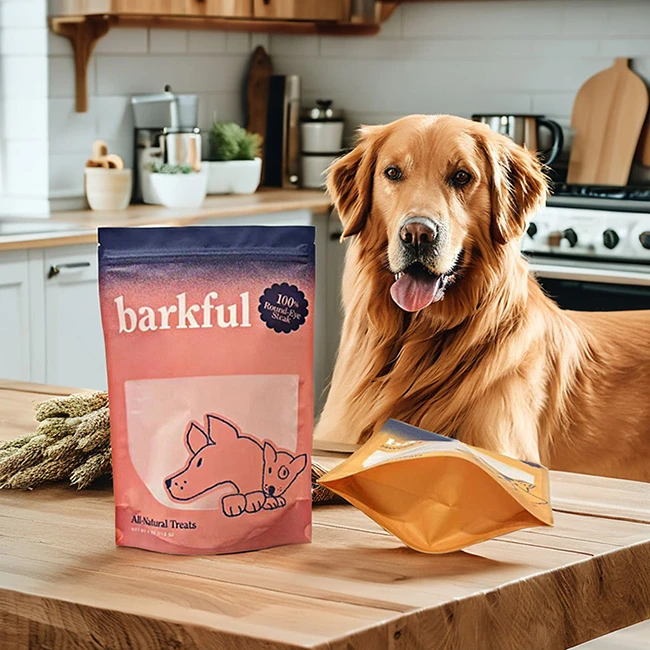
Stand-up pouches are widely used for dry pet food, pet treats, supplements, and some wet pet food products. Dry applications often use resealable zippers, while high-barrier and retort-capable pouch structures can support selected wet or semi-moist pet food applications that require more demanding processing and shelf-life performance.
Dry Pet Treats Need Strength and Resealability
Pet treats often have irregular shapes.
Some pieces can be hard or sharp. Larger packs can also become heavy.
I therefore check:
- Puncture resistance
- Film thickness
- Seal strength
- Zipper strength
- Drop performance
- Moisture barrier
- Aroma protection
A stand-up pouch can work well because the base lets the package remain upright while consumers repeatedly open and close it.
Wet Pet Food Needs a Different Material System
Wet pet food is a much more demanding application.
The pouch may need to tolerate retort processing, where the packaged food is subjected to high temperature and pressure to achieve shelf stability.
Current commercial retortable stand-up pouch structures include PP-based mono-material designs for wet pet food and ready meals, showing how the format now extends well beyond basic dry-food packaging.
I would never use an ordinary snack-pouch laminate for this application.
The product, sterilization conditions, seal integrity, and barrier requirements need to be engineered together.
Can Stand-Up Pouches Be Used for Liquids and Semi-Liquids?
I do not limit stand-up pouches to dry products. With the right film and closure system, the format can also package liquids, sauces, purees, and other semi-liquid products.
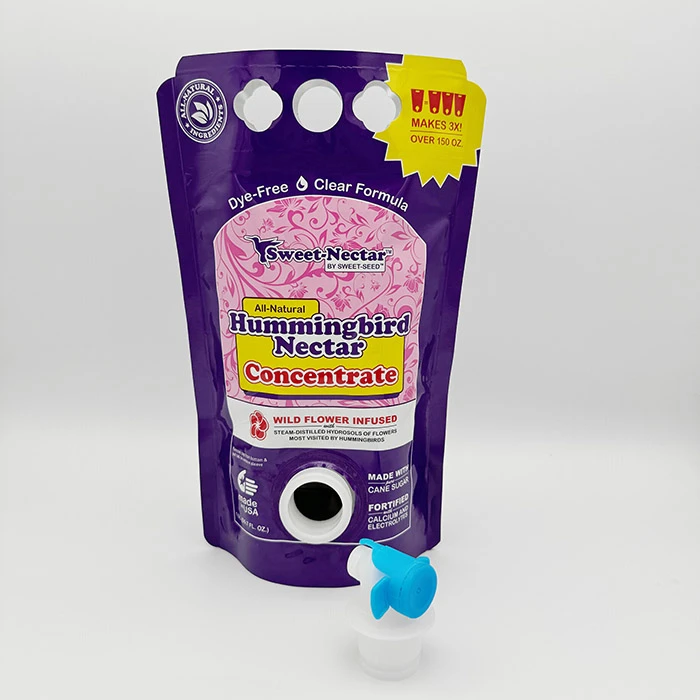
Stand-up pouches can be used for sauces, baby food, purees, liquid foods, ready meals, and other wet products. I often combine these applications with spouts or fitments for controlled dispensing, while retort-capable structures can be used when the product requires heat processing for shelf stability.
Spouts Change How the Pouch Is Used
A standard zipper works well for dry products.
For liquids, I often consider a spout instead.
A spout can help with:
- Pouring
- Reclosing
- Portion control
- Reduced spills
- Consumer handling
This makes spouted stand-up pouches useful for products such as sauces, purees, beverages, and refill products.
ProAmpac currently offers stand-up pouch designs with spouts, fitments, and closures specifically engineered around spill control and consumer convenience.
Ready Meals and Retort Foods
Stand-up retort pouches can also be used for ready meals, rice, baby foods, soups, and wet pet food.
Retort processing is very different from packaging a dry snack. The materials must survive high temperatures while maintaining seal integrity and barrier performance.
I therefore treat the word stand-up pouch as a description of the package shape rather than an indication of its technical performance.
A snack pouch and a retort pouch can look similar but use completely different material structures.
What Non-Food Products Use Stand-Up Pouches?
I see the format expanding far beyond food because many household and personal-care products also benefit from lightweight flexible packaging and resealable or spouted closures.
Stand-up pouches are also used for household cleaners, detergent products, cleaning wipes, personal-care items, nutraceuticals, pharmaceutical-related products, and other non-food applications. The package can use zippers, sliders, spouts, or custom barrier films depending on whether the product is a powder, tablet, wipe, liquid, or refill.
Supplements and Nutraceuticals
I often consider stand-up pouches for:
- Protein powder
- Vitamin gummies
- Nutritional powders
- Functional food blends
- Supplement tablets
- Powdered drink products
These products often benefit from a zipper because consumers use them repeatedly.
Glenroy identifies nutritional and nutraceutical powders among common applications for zipper and slider pouches.
Household Products
Stand-up pouches can also package household products such as detergent pods and cleaning wipes.
For these products, I pay attention to product compatibility.
A household chemical can interact differently with packaging film than a dry food does. The sealant and barrier layers therefore need to be tested with the actual formulation.
I also consider child resistance when regulations or product risk make it necessary.
Personal Care
Flexible pouches can also be used for personal-care and refill applications.
Examples can include:
- Shampoo refills
- Lotion refills
- Liquid soap
- Bath products
- Beauty powders
- Wipes
The main advantage is that I can combine a lightweight package with a spout or other closure.
I still check chemical compatibility because oils, fragrances, alcohols, and active ingredients can affect flexible packaging materials differently.
Why Do Brands Choose Stand-Up Pouches Instead of Rigid Packaging?
I think this question explains why the format appears in so many different markets.
Brands choose stand-up pouches because they combine upright shelf presentation with lightweight flexible materials, customizable barriers, large printing surfaces, and closure options. Empty pouches also take less storage and transportation space than many rigid containers, while the finished package can still provide a strong front-facing retail display.
I See Several Functions in One Package
A stand-up pouch can perform several jobs at once.
It can contain the product.
It can provide the required barrier.
It can stand on the shelf.
It can carry printed branding.
It can include a zipper or spout.
It can remain relatively lightweight.
This combination makes the format useful for both established brands and new product launches.
The Front Panel Has Real Commercial Value
I often think of the front of a stand-up pouch as a small billboard.
It can carry:
- Brand identity
- Product name
- Flavor
- Main benefits
- Product photography
- Certification marks
- Instructions
Sealed Air specifically highlights the printing area and upright retail presence of stand-up pouches as benefits for brand visibility.
This matters especially when several competing products are placed next to one another.
I Still Do Not Use Stand-Up Pouches for Everything
The format is versatile, but it is not always the best answer.
A single-serving powder may be more efficient in a flat 3-side seal pouch.
A heavy premium coffee product may benefit from a flat-bottom pouch.
A rigid bottle may still make more sense when the product requires specific handling, dispensing, or mechanical protection.
I choose stand-up packaging when the standing base, flexible structure, and available closures create real value.
My Insights: What Are Stand-Up Pouches Used For
I think the broad list of applications is useful, but the real reason stand-up pouches work across so many markets is their ability to change without losing their basic structure.
Stand-up pouches are used for products that need a combination of shelf visibility, flexible barrier protection, customizable closures, and efficient material use. I use the format for dry foods, coffee, pet food, supplements, liquids, household products, and personal care because the same basic standing pouch can be engineered differently for each application.
I Think the Closure Often Reveals the Intended Use
When I look at a stand-up pouch, the closure tells me a lot.
A zipper usually suggests repeated access.
A slider may suit larger dry products or powders.
A spout usually indicates a liquid or semi-liquid product.
A one-way valve may indicate coffee.
A simple tear notch may be enough for a product that consumers finish soon after opening.
This is why I do not add features simply because they are available.
I match them to actual consumer behavior.
I Separate the Application From the Material
I also think this is one of the most important lessons.
The words stand-up pouch describe the format.
They do not tell me the barrier level.
A pouch for dry candy may use a relatively simple material.
A pouch for coffee may need higher oxygen and moisture protection.
A wet pet food pouch may need to survive retort processing.
A detergent pouch may need chemical resistance.
The standing shape remains similar, but the technical package changes.
I Choose the Bottom Style According to Product Weight
Not every stand-up pouch uses exactly the same bottom geometry.
Different configurations can support different fill weights and stability requirements. Doyen, K-seal, plow-bottom, and flat-bottom structures distribute load in different ways.
I therefore think about:
- Product weight
- Product density
- Fill volume
- Center of gravity
- Required shelf stability
- Filling equipment
A lightweight snack and a heavier dry product should not automatically use the same gusset design.
My Practical Application Guide
| If I Am Packaging... | Stand-Up Pouch Feature I Consider |
|---|---|
| Snacks and nuts | Zipper + moisture barrier |
| Coffee | High barrier + zipper + degassing valve |
| Tea | Aroma/moisture barrier + zipper |
| Protein powder | Wide opening + strong zipper |
| Pet treats | Durable film + zipper |
| Wet pet food | Retort-capable structure |
| Sauce or puree | Spout + leak-resistant seals |
| Ready meals | Retort structure |
| Baby food | Spout or retort format |
| Detergent pods | Secure resealable closure |
| Cleaning wipes | Reclose feature |
| Personal-care refill | Spout + compatible film |
For me, this table explains why the stand-up pouch is so widely used.
The package does not force every product into the same solution.
I can adjust the film, gusset, zipper, spout, valve, printing, thickness, size, and barrier performance around what the product actually needs.
That versatility is the real reason stand-up pouches appear in so many industries.
I would not ask only whether a product can go into a stand-up pouch.
I would ask whether the standing structure improves the way the product is filled, protected, displayed, transported, opened, and used.
When it does, the stand-up pouch becomes a very practical packaging choice.
Conclusion
I use stand-up pouches for snacks, coffee, pet food, powders, supplements, liquids, household goods, and personal-care products when upright display, customizable protection, and convenient closures add real value.