
](https://www.sglpackaging.com/wp-content/uploads/2026/09/What-Is-the-Best-Packaging-for-Tea.webp "What Is the Best Packaging for Tea? 1")
Tea can lose its aroma and fresh character without looking spoiled. The wrong package can let moisture, oxygen, light, and outside odors slowly change the leaves.
The best packaging for tea is usually a high-barrier, airtight pouch that protects against moisture, oxygen, light, and aroma loss. I often choose resealable stand-up pouches for versatile retail packaging, flat bottom bags for premium presentation, and foil or metallized barrier structures when maximum freshness protection is the main priority.
I do not choose tea packaging only by appearance. I first consider the type of tea, expected shelf life, humidity during distribution, package size, consumer use, filling method, and sales channel. Green tea, black tea, herbal blends, matcha, and tea bags can all need different packaging solutions even when they are sold in similar-looking bags.
What Type of Packaging Best Preserves Tea?
Tea is a dry product, but that does not mean it is easy to protect. Its aroma and flavor can change when the leaves interact with the surrounding environment.
I consider high-barrier flexible pouches among the best packaging options for preserving tea because they can limit moisture, oxygen, light, and odor exposure at the same time. A strong heat seal protects the unopened product, while a zipper can help consumers close the pouch between uses after the original seal has been opened.
I Focus on Four Main Risks
When I develop tea packaging, I normally think about four factors first.
Moisture is one of the most important.
Dry tea leaves can absorb water from humid air. This can change texture, flavor, aroma, and storage stability. Matcha and powdered tea can also clump when moisture enters the package.
Oxygen can also affect tea quality.
Delicate teas can lose freshness as oxidation continues during storage. The degree of sensitivity depends on the tea type and processing method.
Light creates another risk.
A fully transparent pouch may look attractive, but it can expose sensitive tea to more light. For premium tea with a longer target shelf life, I usually prefer an opaque or barrier structure unless product visibility provides an important commercial benefit.
Aroma loss and odor absorption are also important.
Tea contains volatile aromatic compounds. At the same time, dried tea can absorb surrounding odors. This means the package needs to keep desirable aromas inside while limiting unwanted odors from entering.
| Packaging Risk | What I Look For |
|---|---|
| Moisture | Low moisture transmission and strong seals |
| Oxygen | Effective oxygen barrier |
| Light | Opaque, metallized, foil, or suitable barrier layer |
| Aroma loss | Low gas transmission and reliable closure |
| Outside odors | Strong barrier and airtight storage |
| Repeated opening | Resealable zipper |
| Physical damage | Suitable film strength and pouch construction |
I Usually Prefer a Heat Seal Plus Zipper
For retail loose-leaf tea, I like a package with both a permanent heat seal and a zipper.
The heat seal protects the tea before purchase.
The consumer tears or cuts the sealed top after opening the package for the first time. The zipper then becomes the daily reclosure system.
I do not treat the zipper as equal to the original heat seal. A zipper is useful for convenience, but the unopened pouch normally depends on the heat-sealed closure for stronger package integrity.
This combination works particularly well for tea that consumers use over several weeks.
Is Foil or Metallized Packaging Better for Tea?
I often consider foil and metallized films because tea benefits from strong protection against light, moisture, oxygen, and aroma loss.
Aluminum foil laminates generally provide very strong light, moisture, oxygen, and aroma barriers, while metallized films can provide strong protection with a thinner metallic layer and often lower material cost. I choose between them according to tea sensitivity, shelf-life target, distribution conditions, package flexibility, price, and sustainability requirements.
Aluminum Foil Provides Strong Barrier Protection
A traditional high-barrier tea pouch may use a structure such as:
PET / Aluminum Foil / PE
Each layer performs a different job.
The outer PET can provide printing quality, stiffness, and surface strength.
The aluminum foil provides strong resistance against light and gas transmission.
The inner PE provides a food-contact surface and heat-sealing function.
I may consider foil laminates for:
- Premium green tea
- Matcha
- High-aroma loose-leaf tea
- Long-distance export
- Long shelf-life requirements
- High-value specialty teas
The disadvantage is material complexity.
Traditional foil laminates combine different material families, which can make recycling difficult in many markets. Foil can also be more sensitive to repeated sharp flexing than some all-plastic film structures.
Metallized Film Can Give Me a Good Balance
Metallized PET uses a very thin deposited metal layer instead of a solid aluminum foil sheet.
A common tea packaging structure can look like:
PET / MET PET / PE
I often consider this structure for mainstream and premium retail tea because it can provide good light, moisture, oxygen, and aroma protection without using a full foil layer. Current tea packaging suppliers commonly use PET/MET PET/PE as a practical high-barrier structure for retail tea.
I still do not select material from the name alone.
I prefer to compare actual barrier data, such as oxygen transmission and water vapor transmission, when shelf life is important.
Paper Alone Is Usually Not My First Barrier Choice
Kraft paper can create a natural premium appearance.
However, paper itself does not automatically provide the strong moisture and oxygen barrier that delicate tea may need.
If I want a kraft look, I usually treat the paper as part of the appearance or outer structure while relying on a functional barrier layer inside.
A decorative paper pouch with inadequate inner protection may look premium but preserve tea less effectively than a simple high-barrier film pouch.
That is why I put tea protection before surface style.
Is a Stand-Up Pouch or Flat Bottom Bag Better for Tea?
Both formats can protect tea very well when I use the correct material. The main difference is how they present, store, and support the product.
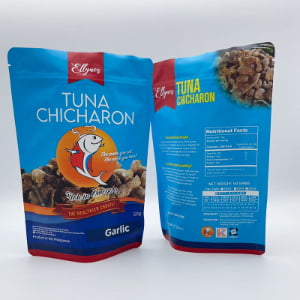
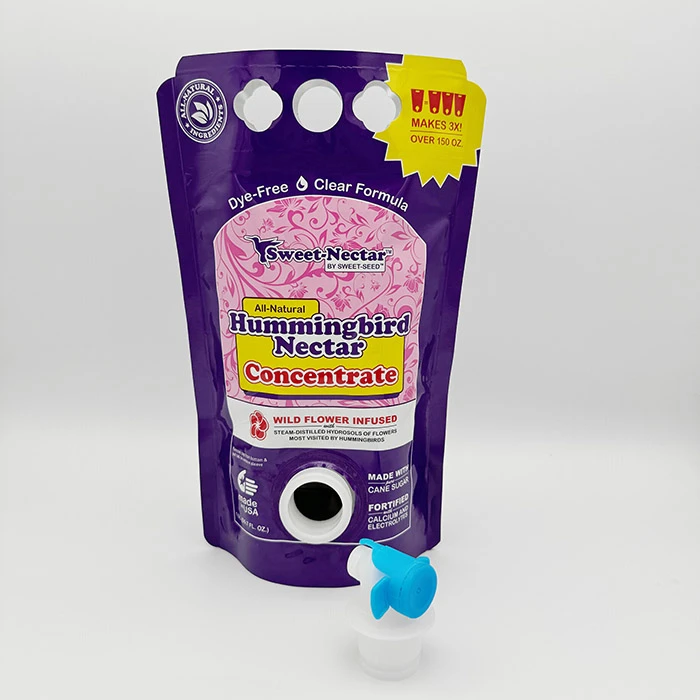
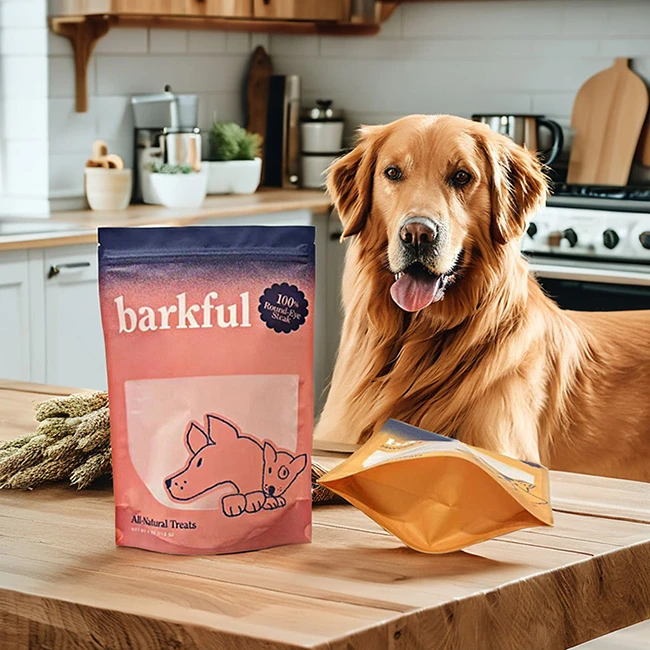
I usually choose stand-up pouches for tea brands that want a balance of cost, shelf presence, lightweight shipping, and resealability. I choose flat bottom bags when premium shelf presentation, stronger standing stability, and additional side panels for branding are more important. Both formats can use the same types of high-barrier films.
Stand-Up Pouches Work Well for Most Retail Tea
A stand-up pouch uses an expandable bottom gusset.
After filling, the gusset opens and creates a standing base.
I find this format especially practical for:
- Loose-leaf tea
- Herbal blends
- Flavored tea
- Fruit infusions
- Matcha refills
- Tea powders
- Small premium retail packs
The front and back provide large printing areas.
I can also add:
- Zipper
- Tear notch
- Hang hole
- Transparent window
- Matte finish
- Gloss finish
For many tea brands, this provides a strong balance between packaging cost and retail presentation.
Flat Bottom Bags Create a More Premium Structure
A flat bottom tea bag has a defined rectangular base with side gussets.
It produces a cleaner, more box-like shape after filling.
I particularly like this format when a tea brand wants to communicate premium positioning.
The side panels also give me more space for:
- Brewing instructions
- Tea origin
- Harvest information
- Flavor notes
- Brand story
- QR codes
- Certifications
| Feature | Stand-Up Pouch | Flat Bottom Bag |
|---|---|---|
| Shelf stability | Good | Excellent |
| Structure | Bottom gusset | Rectangular base + side gussets |
| Packaging cost | Usually lower | Usually higher |
| Branding space | Large front/back | Front/back + defined side panels |
| Zipper | Very common | Very common |
| High-barrier film | Available | Available |
| Premium appearance | Strong | Very strong |
| E-commerce use | Excellent | Good |
| Specialty retail | Excellent | Excellent |
I normally choose flat bottom packaging when the additional structure adds commercial value.
If the tea is mainly sold online or the brand is highly price-sensitive, a stand-up pouch can provide nearly all the functional benefits with a simpler structure.
Side Gusset Bags Can Work for Traditional and Larger Packs
I also consider side gusset packaging.
Expandable side gussets create more capacity without requiring the same bottom construction as a flat bottom pouch.
This format can work for bulk loose-leaf tea, food-service tea, and traditional retail products. Side gusset formats remain widely used for both coffee and tea packaging.
What Is the Best Packaging for Loose-Leaf Tea, Matcha, and Tea Bags?
I do not use the same packaging specification for every tea product because leaf size, aroma sensitivity, serving format, and consumer behavior are different.
For loose-leaf tea, I usually prefer a resealable high-barrier pouch. For matcha, I prioritize very strong protection from moisture, oxygen, and light and often consider foil-based or similarly high-barrier packaging. For individually wrapped tea bags, the outer envelope becomes an important barrier because the filter material itself must remain permeable for brewing.
Loose-Leaf Tea
For most loose-leaf tea, my starting specification would usually include:
- High-barrier material
- Heat-sealed top
- Resealable zipper
- Opaque or light-blocking design
- Correct size for the fill volume
Loose leaves can be bulky.
This means I choose pouch dimensions from actual volume rather than weight alone.
One hundred grams of large rolled oolong leaves can occupy much more space than 100 grams of a fine black tea.
A fill test is therefore much more useful than selecting a pouch only from a generic size chart.
Matcha
Matcha needs even more careful packaging.
The powder has a large exposed surface area and can react quickly to moisture, oxygen, and light.
I usually prioritize barrier performance over a clear product window.
A small high-barrier pouch or tightly sealed inner package can make more sense than a large transparent bag.
I also prefer smaller package sizes when consumers use the tea slowly because each opening introduces new air into the package.
This leads to an important packaging principle:
Sometimes a smaller package can preserve quality better than simply adding a stronger film.
Tea Bags
Tea bags create two packaging levels.
The inner filter bag needs to let hot water move through the tea during brewing.
That means it cannot function as the main long-term barrier.
If each tea bag has an individual envelope, the outer wrapper can provide additional moisture, oxygen, light, and aroma protection. Current tea-envelope packaging uses materials such as OPP, paper compounds, cellophane, and PLA-based structures, each with different barrier and sustainability profiles.
For premium tea bags, I therefore evaluate the individual envelope as part of the freshness system.
My Tea Packaging Selection Guide
| Tea Product | Packaging I Usually Consider |
|---|---|
| Premium loose-leaf tea | Flat bottom or stand-up high-barrier pouch |
| Everyday loose-leaf tea | Stand-up zipper pouch |
| Green tea | Strong light/oxygen/moisture barrier |
| Black tea | High-barrier zipper pouch |
| Herbal tea | Aroma-protective barrier pouch |
| Matcha | Small opaque high-barrier pouch |
| Tea samples | 3-side seal pouch |
| Individual tea bags | Barrier envelope + outer carton |
| Bulk tea | Side gusset or center-seal high-barrier bag |
| Gift tea | High-barrier inner pouch + decorative box or tin |
For me, the decorative outer package should never replace the functional inner barrier when tea quality depends on it.
Are Recyclable and Sustainable Tea Pouches a Good Choice?
I see growing demand for simpler material structures, but I do not think sustainability should be separated from tea freshness.
Recycling-oriented mono-material PE or PP pouches can be a good option when they provide enough moisture, oxygen, and aroma barrier for the specific tea. However, recyclability depends on the finished package and local recycling infrastructure. I would not reduce necessary barrier performance only to make a simpler sustainability claim.
Mono-Material Structures Are Improving
Traditional tea packaging often combines PET, metallized films, foil, and PE.
These structures can perform well, but they can be difficult to separate for recycling.
Newer packaging systems try to build the required functions mainly within one polymer family, such as PE or PP.
This can improve compatibility with certain flexible-plastic recycling streams.
The challenge is tea's demanding barrier requirement.
Tea is not simply a dry product that needs a bag around it. It needs protection from moisture and oxygen while also retaining volatile aroma. This creates a real technical trade-off between simplified materials and high barrier performance.
I Compare Sustainability With Product Waste
I also think about the tea itself.
Premium tea may require substantial agricultural production, processing, drying, transport, and storage.
If weak packaging causes that product to lose its intended aroma before it reaches the consumer, I have not created an efficient packaging system.
I therefore try to balance:
- Material reduction
- Barrier performance
- Pouch thickness
- Recyclability design
- Shelf life
- Shipping efficiency
- Product waste
This is why I prefer a package that uses enough material to protect the tea, but not unnecessary material.
Tins Can Still Have a Role
Metal tea tins provide excellent light protection and strong physical protection.
They also create a premium presentation.
However, I pay close attention to the lid.
A decorative tin with a loose lid may not provide the same airtight barrier as a properly heat-sealed flexible pouch. A high-barrier inner pouch inside a reusable outer tin can therefore combine strong freshness protection with premium presentation.
I think this combination makes particular sense for gift tea and high-value specialty products.
My Insights: What Is the Best Packaging for Tea
I think the best tea package becomes clear when I stop asking which bag looks most premium and start asking which system best protects the tea after filling and after opening.
The best packaging for tea is an airtight, high-barrier structure designed around moisture, oxygen, light, aroma, and consumer use. I usually choose a resealable stand-up pouch for versatile retail tea, a flat bottom pouch for premium positioning, and stronger foil or metallized structures when freshness protection matters more than product visibility.
I Think Aroma Protection Deserves More Attention
Many buyers understand that tea should stay dry.
I think aroma loss receives less attention than it should.
Tea can remain visually normal while its most valuable aromatic characteristics fade.
This means I do not evaluate the package only by whether it prevents mold or obvious moisture damage.
I ask whether it preserves the sensory experience consumers expect when they first open the pouch.
For premium loose-leaf tea, that first aroma can be part of the product itself.
I Usually Avoid Large Clear Windows for Sensitive Tea
A transparent window can help consumers see the tea leaves.
This may be useful for blends with visually attractive flowers, fruit pieces, or herbs.
However, a large window can reduce light protection depending on the film structure.
I therefore see windows as a trade-off.
If the tea is highly light-sensitive or needs a long shelf life, I may choose a fully opaque package.
If visibility is important, I may use a smaller window rather than making the entire pouch clear.
I Do Not Add a Coffee Valve to Tea Without a Reason
Coffee and tea are often sold in similar pouch formats, but their packaging requirements are not identical.
Fresh roasted coffee releases substantial carbon dioxide after roasting, which is why one-way degassing valves are common.
Normal dry tea does not have the same degassing requirement.
I therefore would not automatically add a valve to a tea pouch simply because the same pouch manufacturer also produces coffee packaging.
This removes unnecessary cost and one additional component from the package.
I Think Package Size Can Protect Freshness
A very large tea pouch may reduce packaging cost per gram.
However, it also creates more headspace and may remain open longer in the consumer's home.
For high-value tea, several smaller pouches may sometimes preserve quality better than one large package.
This becomes especially relevant for:
- Matcha
- Delicate green tea
- Premium oolong
- High-aroma tea
- Slow-consumption products
I therefore consider serving behavior when choosing the final fill weight.
My Practical Tea Packaging Framework
| If I Need... | My First Choice |
|---|---|
| Strong all-around retail solution | Stand-up zipper pouch |
| Premium shelf appearance | Flat bottom pouch |
| Maximum traditional barrier | Foil laminate |
| Good barrier/cost balance | Metallized laminate |
| Loose-leaf tea | High-barrier resealable pouch |
| Matcha | Small opaque high-barrier pack |
| Tea samples | 3-side seal pouch |
| Bulk tea | Side gusset or center-seal bag |
| Premium gift packaging | Barrier inner pouch + tin/box |
| Recycling-oriented design | Evaluate high-barrier mono-PE or mono-PP |
| Product visibility | Small window if barrier requirements allow |
| Long shelf life | Strong oxygen/moisture/light barrier |
For me, the question “What is the best packaging for tea?” therefore does not have one universal pouch answer.
A premium loose-leaf tea may work best in a flat bottom bag.
A growing retail brand may get a better balance from a stand-up pouch.
A high-volume tea producer may use side gusset bags or rollstock.
A matcha brand may need a smaller, stronger barrier package.
An expensive gift tea may work best with a high-barrier inner pouch inside a decorative tin or paperboard box.
The common requirement is protection.
I want the tea to reach the consumer with the aroma, dryness, color, and flavor profile that the producer intended.
Once that requirement is clear, I can select the pouch shape, film structure, zipper, printing, size, and sustainability approach around it.
Conclusion
I usually choose high-barrier resealable pouches for tea, using stand-up bags for versatility, flat bottom bags for premium presentation, and foil or metallized structures when stronger freshness protection is required.