
](https://www.sglpackaging.com/wp-content/uploads/2026/09/What-Are-the-Four-Types-of-Food-Packaging.webp "What Are the Four Types of Food Packaging? 1")
Choosing food packaging can become confusing because every material protects food differently. The wrong choice can affect shelf life, cost, transport, and consumer convenience.
The four main types of food packaging by material are plastic, paper and paperboard, glass, and metal. Each has different strengths: plastic offers flexibility and low weight, paper provides printability and stiffness, glass gives excellent barrier properties, and metal provides strong physical protection and long-term barrier performance.
I find this four-material classification the most useful when comparing actual packaging options. However, food packaging can also be classified by packaging level, such as primary, secondary, and transport packaging. In this guide, I focus first on the four major material families and then explain how packaging levels fit into the decision.
What Is Plastic Food Packaging?
Plastic is one of the broadest food packaging categories because it can be made rigid, semi-rigid, or flexible and can be engineered for very different barrier and sealing requirements.
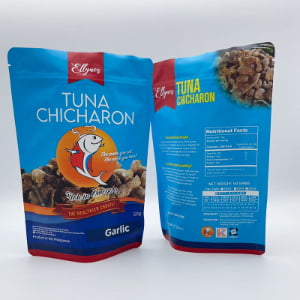
Plastic food packaging includes flexible pouches, bags, films, trays, bottles, tubs, and containers made from polymers such as PE, PP, PET, and PA. I commonly choose plastic when lightweight construction, heat sealing, product visibility, flexible sizing, or customized oxygen and moisture protection are important.
I See Plastic as a Material Family, Not One Material
The word plastic does not tell me enough about a food package.
Polyethylene, polypropylene, PET, nylon, EVOH-containing films, and multilayer laminates behave differently.
For example, I may use PE as a sealing layer in a pouch. PET can provide stiffness and a good printing surface. PP can work in rigid containers or heat-resistant flexible structures. Nylon can improve puncture resistance.
This is why two plastic food packages can have very different performance even if they look almost identical.
Flexible packaging is especially important because manufacturers can combine several functions in one lightweight structure.
I can develop:
- Stand-up pouches
- 3-side seal bags
- Flat bottom bags
- Zipper pouches
- Vacuum bags
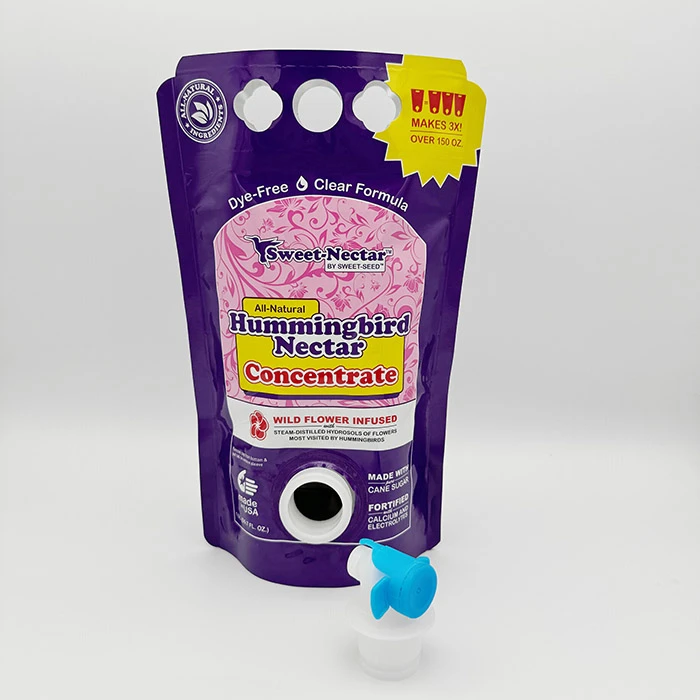
- Spout pouches
- Rollstock films
- Retort pouches
The FDA treats food packaging components as food-contact substances and requires their regulatory status to be appropriate for their intended food-contact conditions. Those conditions can vary from frozen storage to hot filling and high-temperature sterilization.
Why I Choose Plastic Packaging
| Advantage | Why It Matters |
|---|---|
| Lightweight | Can reduce transport weight |
| Heat sealable | Useful for bags, pouches, and films |
| Flexible design | Supports many pouch and container shapes |
| Barrier customization | Layers can target oxygen, moisture, or aroma |
| Printing | Large areas can support branding |
| Transparency | Some films allow product visibility |
| Resealability | Zippers, spouts, and closures can be integrated |
Plastic also has disadvantages.
Some multilayer flexible packages are difficult to recycle because several polymers or foil layers are combined. Mono-material PE and PP structures are being developed to reduce this complexity, but actual recyclability still depends on the complete package and the recycling infrastructure in the target market.
I therefore do not select plastic simply because it is lightweight. I compare product protection, sealing, shelf life, filling equipment, compliance, and end-of-life requirements together.
What Is Paper and Paperboard Food Packaging?
Paper and paperboard are common food packaging materials because they are lightweight, printable, and easy to convert into cartons, boxes, bags, wraps, and food-service packaging.
Paper and paperboard food packaging includes folding cartons, corrugated boxes, paper bags, wraps, cups, trays, and coated paper structures. I often use paper when stiffness, branding, secondary protection, or a fibre-based appearance matters, although coatings or additional layers may be needed for moisture, grease, heat sealing, or barrier performance.
Paper Works Well When Structure and Printing Matter
Paperboard gives me something flexible plastic films do not naturally provide: stiffness.
A folding carton can protect a product from light physical pressure and create flat surfaces for printing.
I commonly see paper and paperboard used for:
- Cereal boxes
- Frozen food cartons
- Bakery packaging
- Tea cartons
- Dry-food boxes
- Takeaway food
- Paper bags
- Corrugated shipping boxes
Paper also accepts high-quality graphics.
For brands, this can create a strong retail package without requiring direct printing onto a bottle, tray, or flexible pouch.
Plain Paper Has Limitations
I would not assume paper alone can package every food.
Paper is naturally sensitive to moisture and can absorb oils.
Oklahoma State University notes that paper is not an ideal stand-alone choice for foods with high moisture content or foods that require thermal processing inside the package.
This is why food-grade paper packaging may include:
- Polymer coatings
- Dispersion coatings
- Grease barriers
- Wax treatments
- Aluminum layers
- Plastic liners
- Heat-seal coatings
A beverage carton is a good example.
Consumers may call it a paper carton, but the package usually combines paperboard with other functional layers. Food Packaging Forum notes that in multilayer cartons, the material directly contacting the food may actually be plastic rather than the paperboard itself.
Where I Think Paper Is Strongest
| Application | Why Paper Can Work |
|---|---|
| Cereal | Good stiffness and printing |
| Tea | Strong branding and secondary protection |
| Bakery | Lightweight structural packaging |
| Frozen food carton | Printable outer protection |
| Dry foods | Suitable when moisture risk is controlled |
| Shipping | Corrugated board provides transport protection |
I therefore see paper as especially useful when the product needs structure, communication space, or secondary protection.
For products requiring strong oxygen, moisture, or liquid resistance, I need to evaluate the coatings or combined materials carefully.
What Is Glass Food Packaging?
Glass is one of the strongest barrier materials I can choose for food because it is rigid, nonporous, and highly resistant to gas and moisture transmission.
Glass food packaging includes jars and bottles used for sauces, beverages, jams, pickles, baby food, oils, and other products. I choose glass when product visibility, chemical stability, premium presentation, reuse, or excellent protection against gases and moisture are priorities. Its main disadvantages are weight and breakability.
Barrier Performance Is Glass's Biggest Strength
Glass provides an excellent barrier against gases and water vapor.
It also does not normally absorb food aromas the way some packaging materials can.
This makes it useful for products with long shelf lives or products where flavor and aroma are important.
I commonly see glass used for:
- Jam
- Honey
- Sauces
- Pickles
- Cooking oils
- Juice
- Baby food
- Coffee products
- Premium beverages
Clear glass also gives consumers direct visibility of the food.
This can support trust and product presentation.
Glass Can Handle Thermal Processing
Glass jars can be used for hot-filled or thermally processed foods when the container and process are correctly designed.
This makes glass useful for sauces, preserves, and similar products.
However, glass has two major practical disadvantages.
It is heavy.
It can break.
A heavier container increases transport weight. Breakage also creates safety and product-loss risks during manufacturing, shipping, retail handling, and consumer use.
A major food-packaging review notes that glass is reusable and recyclable but highlights its weight and brittleness as important disadvantages.
Light Can Also Matter
Clear glass gives excellent product visibility, but it does not automatically protect light-sensitive foods.
If a product can degrade when exposed to light, I may need:
- Colored glass
- An outer carton
- A label with greater coverage
- Another packaging format
This reminds me that no food packaging material solves every problem.
Glass gives me exceptional gas and moisture barrier, but I still need to consider light, weight, impact, and logistics.
What Is Metal Food Packaging?
Metal food packaging provides strong physical protection and excellent barrier performance, which is why cans have remained important for shelf-stable food for many years.
Metal food packaging mainly includes steel and aluminum cans, aluminum trays, lids, and foil structures. I choose metal when the food needs strong protection from oxygen, moisture, light, physical damage, or high-temperature processing. Canned vegetables, soup, seafood, meat, beverages, and ready foods are common applications.
Metal Creates a Strong Barrier
An intact metal container blocks light.
It also provides excellent protection against external gases and moisture.
This makes it suitable for products that need long shelf stability.
Common examples include:
- Soup
- Beans
- Vegetables
- Tuna
- Meat
- Pet food
- Soft drinks
- Energy drinks
- Ready-to-eat foods
The two major metals used in packaging are aluminum and steel. Aluminum is also used in foil and in multilayer flexible packaging.
Metal Works Well With Thermal Processing
Canned food is often thermally processed after sealing.
The rigid container can tolerate demanding sterilization conditions when the can and closure are correctly specified.
For shelf-stable products, this can create a strong combination of barrier performance and physical durability.
I Still Look at Internal Coatings
The food does not always contact bare metal directly.
Cans may use internal coatings designed to separate the food from the metal surface.
This matters because acidic or otherwise reactive foods can interact with packaging materials.
The FDA's food-contact framework requires the individual substances that make up food-contact materials to have an appropriate regulatory status for their intended use.
Metal Has Trade-Offs
| Advantage | Limitation |
|---|---|
| Excellent light barrier | Opaque, so consumers cannot see food |
| Strong physical protection | Usually heavier than flexible film |
| Good shelf-life potential | Can require specialized canning equipment |
| Heat-process compatible | Internal coatings may be necessary |
| Recyclable material | Forming and manufacturing use more material than many flexible packs |
I often consider metal when protection and thermal processing matter more than package weight or transparency.
Which Type of Food Packaging Is Best?
I do not believe one of the four materials is universally better because different foods have very different packaging requirements.
The best food packaging type depends on the food's moisture, fat, acidity, oxygen sensitivity, light sensitivity, filling temperature, shelf-life target, storage conditions, and distribution method. Plastic offers versatility, paper provides structure and printability, glass gives strong barrier and premium presentation, and metal provides excellent physical and light protection.
I Start With the Food, Not the Package
FDA food-contact guidance separates foods into categories such as aqueous foods, acidic foods, fatty foods, dairy products, beverages, bakery products, and dry solids. It also separates conditions including room-temperature storage, refrigeration, freezing, hot filling, boiling-water sterilization, and high-temperature sterilization.
I find this a useful reminder.
The same packaging material cannot automatically be used in every food-contact condition.
For example:
| Product | Material Direction I Might Evaluate |
|---|---|
| Snack | Flexible plastic pouch |
| Cereal | Plastic liner + paperboard carton |
| Jam | Glass jar |
| Soup | Metal can or retort pouch |
| Coffee | High-barrier flexible pouch or suitable rigid package |
| Pickles | Glass jar |
| Frozen food | Plastic film + paperboard carton |
| Beverage | PET bottle, glass bottle, carton, or metal can |
I then consider the required barrier.
Does oxygen damage the food?
Does moisture change its texture?
Does light cause degradation?
Does the product contain fat or oil?
Will it be frozen?
Will it be retorted?
These questions are more important than simply asking which material looks better.
Are the Four Types of Food Packaging Also Primary, Secondary, Tertiary, and Quaternary Packaging?
I sometimes see the phrase “four types of packaging” used in a different way, so I think it is useful to separate the two classifications.
Plastic, paper, glass, and metal describe packaging by material. Primary, secondary, tertiary, and sometimes quaternary packaging describe packaging by its role in the supply chain. Primary packaging directly contains the food, while secondary and tertiary packaging group and transport products. These classifications answer different questions.
Primary Packaging
Primary packaging is the package closest to the product.
Examples include:
- A stand-up pouch holding nuts
- A glass jar holding jam
- A metal can holding soup
- A plastic bottle holding juice
This is usually the most important food-contact packaging level.
Secondary Packaging
Secondary packaging groups primary packages.
Examples include:
- A printed carton around individual food sachets
- A cardboard tray holding several yogurt cups
- A multipack box containing snack products
The secondary package may provide branding, merchandising, or additional protection.
Tertiary Packaging
Tertiary packaging is mainly used during distribution.
Examples include:
- Corrugated shipping cases
- Pallet loads
- Stretch wrapping
Its main job is to move larger quantities efficiently through warehouses and transport networks.
Quaternary Packaging
Some supply-chain classifications also use quaternary packaging for very large-scale handling systems such as pallets, containers, or intermodal transport units.
However, this fourth level is less consistently used than the first three.
That is why, when someone asks me for the “four types of food packaging,” I usually clarify the classification.
For a material-focused food packaging article, I use:
Plastic + Paper + Glass + Metal.
For a logistics-focused article, I would instead discuss packaging levels.
My Insights: What Are the Four Types of Food Packaging
I think the most useful answer is to understand what problem each material solves instead of treating the four categories as interchangeable containers.
The four main types of food packaging are plastic, paper and paperboard, glass, and metal. I choose among them by balancing barrier protection, sealing, physical strength, thermal processing, package weight, consumer convenience, branding, transportation, regulatory requirements, and end-of-life considerations rather than selecting one material only by cost or appearance.
I Think Flexible Plastic Often Wins on Material Efficiency
Plastic flexible packaging can create a pouch from a relatively small amount of material.
This can reduce package weight and empty-package transportation volume.
It also lets me engineer different barrier layers and closures.
That makes flexible films especially useful for snacks, coffee, pet food, powders, frozen foods, and many other products.
However, multilayer structures can become difficult to recycle.
This means material efficiency and recyclability are not automatically the same thing.
I Think Paper Works Best When It Does a Structural Job
Paper is often selected because it looks natural or renewable.
I think its strongest packaging value is broader than appearance.
Paperboard provides stiffness, printing space, and secondary protection.
For cereal, frozen foods, bakery goods, and boxed products, these functions can be very useful.
But I do not expect plain paper to provide the same liquid or oxygen barrier as glass, metal, or engineered flexible laminates.
I add only the coatings or liners that the product needs.
I Think Glass Is Excellent but Logistics-Heavy
Glass gives me excellent barrier performance and strong consumer perceptions for premium foods.
The problem appears in logistics.
Glass is heavier than flexible packaging and can break.
If I am shipping a product over long distances, I need to consider whether the premium appearance and barrier justify the additional transport and handling burden.
For local premium sauces or preserves, the answer may be yes.
For a lightweight snack, probably not.
I Think Metal Is Strongest When Protection Is Non-Negotiable
Metal gives me strong mechanical protection, full light barrier, and good suitability for thermal processing.
This makes it difficult to replace in some shelf-stable food applications.
However, a metal can is unnecessary for many lightweight dry products.
Again, the product decides the package.
My Practical Four-Material Comparison
| If I Need... | Material I Usually Evaluate First |
|---|---|
| Lightweight flexible packaging | Plastic |
| Stand-up zipper pouch | Plastic |
| Strong printability and carton structure | Paper/paperboard |
| Shipping carton | Paperboard/corrugated board |
| High product visibility with strong barrier | Glass |
| Premium jar presentation | Glass |
| Strong physical protection | Metal |
| Complete light protection | Metal |
| Thermal canning | Metal |
| Very low package weight | Flexible plastic |
| Fibre-based retail presentation | Paper |
| Reusable rigid container | Glass |
I therefore do not ask only, “Which of the four materials is best?”
I ask what the packaging must do.
Does it need to stand?
Does it need to survive retort?
Does the consumer need to see the food?
Does the package need to block light?
Will it travel thousands of kilometers?
Does it need a zipper?
Is the product oily, acidic, dry, or frozen?
What shelf life does it need?
What food-contact rules apply in the target market?
Once I answer those questions, plastic, paper, glass, and metal become tools rather than competing labels.
That is how I choose the most appropriate food packaging type for a real product.
Conclusion
The four main food packaging materials are plastic, paper, glass, and metal. I choose among them based on product protection, processing, logistics, consumer use, branding, regulatory needs, and total packaging performance.