
](https://www.sglpackaging.com/wp-content/uploads/2026/08/What-Are-the-Benefits-of-Using-Stand-Up-Pouches.webp "What Are the Benefits of Using Stand-Up Pouches? 1")
I often see brands need packaging that protects the product, looks good on shelves, and keeps shipping costs under control. Stand-up pouches can solve all three problems.
The main benefits of using stand-up pouches include strong shelf visibility, lightweight construction, lower storage and transportation needs, customizable barrier protection, resealable convenience, and flexible printing options. They can package many dry, liquid, and semi-liquid products while using much less space than many rigid containers.
I do not choose a stand-up pouch only because it can stand upright. I look at the whole packaging system. The material, bottom gusset, zipper, printing, filling process, product weight, shelf-life requirement, and shipping method all affect whether the pouch is the right choice.
What Is a Stand-Up Pouch and How Does It Work?
A stand-up pouch looks simple from the outside, but its bottom structure is what gives it a major advantage over an ordinary flat bag.
A stand-up pouch is a flexible package with a bottom gusset that expands when the pouch is filled. The expanded bottom creates a base that allows the package to stand upright on a shelf or countertop. The pouch can also include zippers, spouts, tear notches, valves, windows, and other functional features.
I Look at the Bottom Gusset First
When I explain stand-up pouch packaging, I usually start with the bottom.
An empty pouch can stay almost flat because the gusset is folded inside the package. When the product enters the pouch, the bottom section opens. This creates more internal volume and gives the pouch its standing shape.
That simple design gives me several useful advantages.
I can ship and store empty pouches in a much smaller space than bottles, jars, tubs, or cans. At the same time, the pouch becomes a three-dimensional retail package after filling.
This combination is one of the reasons I find stand-up pouches so practical.
The pouch body can use different flexible packaging materials. I can select a simple structure for a product with limited protection needs or a higher-barrier laminate for a product that is sensitive to oxygen, moisture, light, or aroma loss.
I can also change the closure according to how consumers use the product.
| Pouch Feature | What It Can Do |
|---|---|
| Bottom gusset | Allows the filled pouch to stand |
| Zipper | Supports repeated opening and closing |
| Tear notch | Makes initial opening easier |
| Spout | Helps dispense liquids or semi-liquids |
| Degassing valve | Can support suitable coffee applications |
| Window | Allows consumers to see the product |
| Hang hole | Supports hanging retail displays |
| Barrier laminate | Helps protect against selected external conditions |
I therefore see the stand-up pouch as a flexible packaging platform rather than one fixed bag design.
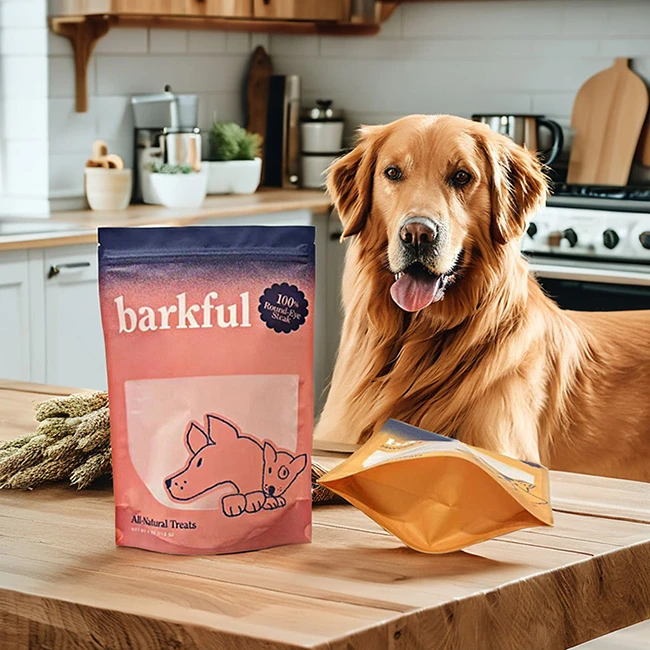
A snack pouch, coffee pouch, pet treat pouch, detergent refill, and sauce pouch may all use a stand-up format, but their materials and features can be very different.
Why Are Stand-Up Pouches Cost-Effective?
I think cost efficiency is one of the strongest reasons brands compare stand-up pouches with jars, bottles, cartons, and other rigid formats.
Stand-up pouches can reduce packaging and logistics costs because they are lightweight and compact when empty. They usually require less storage and transportation space than rigid containers. Their flexible construction can also reduce package weight while still providing the printing, sealing, and product-protection functions required for many applications.
I Compare Total Cost Instead of Only Pouch Price
When I evaluate packaging cost, I do not stop at the price per bag.
A rigid container may arrive at the filling facility already occupying nearly its full finished volume. An empty stand-up pouch can remain relatively flat. This changes how many empty packages can fit into cartons, pallets, warehouses, and trucks.
Lower packaging weight can also matter during transport.
These savings can become more important when a company purchases large quantities or moves packaging across long distances. Industry packaging suppliers commonly identify reduced transportation and warehousing requirements as major advantages of stand-up pouches.
However, I still calculate the complete specification.
A stand-up pouch with high-barrier materials, a premium zipper, special printing effects, a custom spout, or unusual dimensions may cost more than a basic pouch.
I normally compare the following areas:
| Cost Factor | What I Check |
|---|---|
| Packaging material | Film type, layers, thickness, and barrier |
| Printing | Number of colors, method, and finishing |
| Closures | Zipper, slider, spout, valve, or other feature |
| Converting | Pouch size and manufacturing complexity |
| Empty packaging transport | Weight and shipping volume |
| Warehousing | Space needed before filling |
| Filling | Equipment speed and labor requirements |
| Finished-product shipping | Weight, carton use, and breakage risk |
| Waste | Rejects, leakage, and damaged packaging |
This wider calculation is important.
A cheap bag that runs poorly on the filling line can become expensive. A premium pouch can also be unnecessary when the product only requires a basic structure.
I therefore use the stand-up pouch when its material efficiency, shipping efficiency, production process, and consumer value work together.
How Do Stand-Up Pouches Protect Products and Extend Freshness?
I never assume that the pouch shape itself creates product protection. The material structure and seals are what determine much of the actual barrier performance.
Stand-up pouches can provide strong product protection when they use suitable barrier materials and reliable seals. Depending on the laminate, they can help reduce exposure to moisture, oxygen, light, contaminants, and aroma loss. Resealable closures can also help protect products between consumer uses after the original package has been opened.
I Match the Film to the Product
This is one of the most important points I consider when developing flexible packaging.
Two stand-up pouches can look almost identical but perform very differently.
One may use a relatively simple film structure. Another may use several layers selected for strength, sealing, oxygen resistance, moisture resistance, or light protection.
For example, coffee has different requirements from candy. Powder has different requirements from frozen food. Pet treats may need strong aroma and moisture control. A liquid product may place more pressure on seal integrity.
For this reason, I first ask what can damage the product.
Is oxygen the main problem?
Is moisture the main problem?
Does light affect product quality?
Does the product contain oil?
Does the package need puncture resistance?
Does the consumer use the product over several days?
The answers help me select the laminate.
Resealability Can Add Another Layer of Protection
A zipper does not replace the barrier material, but it can improve the way consumers use the package.
After consumers open a traditional single-use package, they may move the remaining product into another container or leave the original package partly open.
A resealable stand-up pouch gives them another option.
They can close the pouch after use. This can help reduce spills and exposure to the surrounding environment. Zipper systems are commonly used on dry foods, snacks, pet treats, and other products that consumers use in several portions.
| Product Concern | Packaging Element I Consider |
|---|---|
| Moisture | Moisture-barrier film |
| Oxygen | Oxygen-barrier structure |
| Light | Opaque, metallized, foil, or other suitable structure |
| Aroma | Appropriate barrier laminate |
| Leakage | Sealant layer and seal design |
| Repeated use | Resealable zipper |
| Physical damage | Puncture and mechanical strength |
| Coffee degassing | Suitable one-way valve when required |
I therefore avoid promising shelf life based only on the words “stand-up pouch.”
I prefer to test the actual product, material, closure, and sealing process together.
Why Are Stand-Up Pouches Convenient for Consumers and Brands?
Packaging has to work after it leaves the factory. I think consumer convenience and brand communication are two reasons stand-up pouches have become common across many product categories.
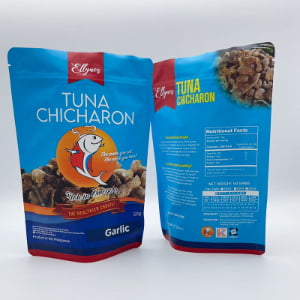
Stand-up pouches are convenient because they are lightweight, portable, easy to store, and available with features such as zippers, spouts, handles, and tear notches. For brands, the upright front and back panels create large printable areas that can carry product information, graphics, instructions, and a strong retail identity.
I See the Front Panel as Valuable Shelf Space
A package on a retail shelf has to communicate quickly.
The upright structure gives the front panel a clear position facing the consumer. I can use that area for the brand logo, product name, flavor, product image, key selling points, and other important information.
The back panel can then hold ingredients, preparation instructions, regulatory information, a barcode, or a brand story.
This creates strong branding space without adding a separate paper label in many printed-pouch applications.
I also have many surface-finishing choices depending on the printing and material system. A brand can use matte or glossy effects, transparent areas, metallic effects, and other treatments when the production method supports them.
Consumer Convenience Changes With the Product
I do not add every possible feature to every pouch.
I select features according to how people use the product.
For a snack that consumers finish at one time, a tear notch may be enough.
For a family-size bag of nuts, granola, coffee, pet treats, or powder, I often consider a zipper because the user may open and close the package many times.
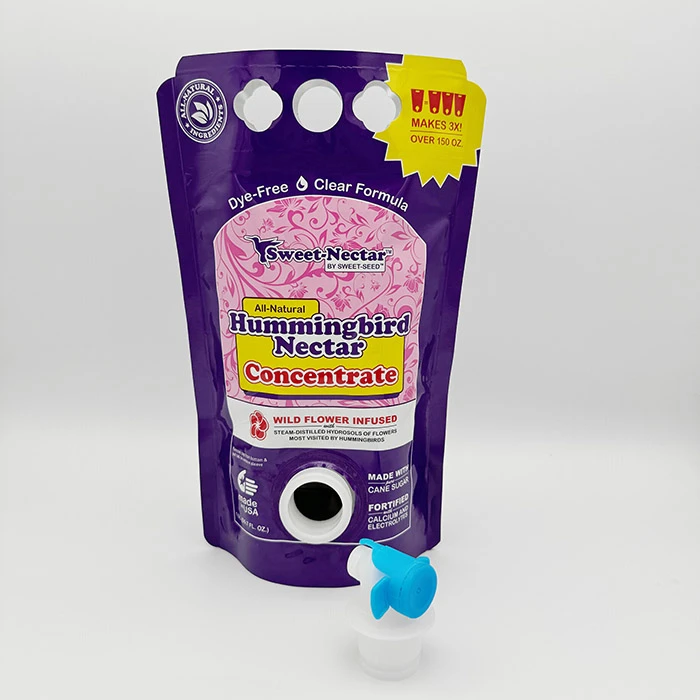
For sauce, puree, beverage, detergent, or refill packaging, I may evaluate a spout.
This creates a different experience from a standard flexible bag.
| Consumer Need | Feature I Might Use |
|---|---|
| Easy first opening | Tear notch |
| Repeated access | Zipper or slider |
| Controlled pouring | Spout |
| Easy carrying | Handle or grip feature |
| Product visibility | Transparent window |
| Retail hanging | Hang hole |
| Portion use | Suitable pouch size and closure |
I think this flexibility is one of the biggest benefits of using stand-up pouches.
The manufacturer does not need to change the entire packaging concept to create another user experience. In many cases, I can keep the basic pouch format and adjust the dimensions, closure, barrier structure, printing, or other features for the next product.
Are Stand-Up Pouches a More Sustainable Packaging Option?
I think sustainability needs a careful answer because a lighter package and a recyclable package are not always the same thing.
Stand-up pouches can offer environmental advantages through lower package weight, efficient material use, and reduced transportation and storage requirements compared with many rigid formats. However, recyclability depends on the exact material structure and local collection system. Multi-material high-barrier laminates can be harder to recycle than properly designed mono-material structures.
I Separate Material Reduction From Recyclability
This distinction matters when I discuss sustainable flexible packaging.
A stand-up pouch can use relatively little packaging material compared with a rigid container serving a similar function. Its low empty-package weight can also reduce the resources required for storage and transportation.
Those are real packaging-efficiency advantages.
However, I do not automatically call every stand-up pouch recyclable.
Traditional high-barrier flexible packaging can combine several materials because each layer performs a different job. One layer may provide printing performance. Another may provide oxygen or light protection. Another may provide heat sealing.
That combination can deliver excellent product protection, but it may create recycling challenges.
Mono-material pouch structures are one approach manufacturers use to improve compatibility with certain recycling streams. Even then, actual recyclability depends on local infrastructure, collection requirements, package components, inks, adhesives, closures, and other factors.
I Also Consider Product Waste
I think sustainability discussions should include the product inside the package.
If inadequate packaging causes food, coffee, pet food, or another product to spoil before consumers use it, the environmental impact does not stop at the bag.
This is why I do not remove barrier performance simply to reduce packaging material.
I try to balance several goals:
- Use only the material needed for the product.
- Maintain enough barrier performance for the required shelf life.
- Avoid unnecessary pouch thickness.
- Consider mono-material structures where technically suitable.
- Reduce empty-package storage and transport volume.
- Design the package for efficient filling.
- Avoid features that do not provide functional value.
- Confirm recycling claims against the intended market.
For me, the better sustainable packaging decision is not always the pouch with the fewest layers.
It is the structure that protects the product adequately while using material and logistics as efficiently as practical.
My Insights: What Are the Benefits of Using Stand-Up Pouches
The obvious benefits are shelf appeal and lower weight, but I think the real value appears when I look at the complete packaging and distribution system.
I see the main benefit of using stand-up pouches as their ability to combine product protection, shelf presentation, logistics efficiency, customization, and consumer convenience in one flexible format. The greatest value comes when the pouch material, size, features, filling process, and product requirements are designed as one system rather than selected separately.
I Think the Biggest Benefit Is Flexibility
When I compare stand-up pouches with many rigid packages, I notice that flexibility appears at almost every stage.
The pouch itself is physically flexible.
The material structure is flexible because I can change the laminate according to product requirements.
The design is flexible because I have large printable surfaces.
The closure system is flexible because I can consider zippers, spouts, valves, tear notches, and other features.
The sizing is flexible because stand-up pouches can be developed for small portions or much larger volumes.
This makes the format useful for brands managing several SKUs.
A company could use the same overall pouch family for multiple flavors or product sizes while changing artwork, dimensions, barrier structures, and functional features.
That creates visual consistency without forcing every product into exactly the same package.
I Would Still Not Use a Stand-Up Pouch for Every Product
Versatility does not mean universal suitability.
Some products need the rigidity of a bottle, jar, tray, or other container. Some filling lines are designed around different packaging formats. Some products are too sharp, heavy, hot, or chemically demanding for a basic pouch design.
The correct decision depends on the application.
I use a simple framework:
| If I Need... | Why I Consider a Stand-Up Pouch |
|---|---|
| Strong retail visibility | The pouch stands upright |
| Lower empty-package volume | Empty pouches can ship relatively flat |
| Reduced package weight | Flexible film is lightweight |
| Resealability | Zippers can be added |
| Liquid dispensing | Spouts can be integrated |
| Custom branding | Large front and back printing areas |
| Product protection | Barrier materials can be selected |
| Many product sizes | Dimensions are highly customizable |
| E-commerce suitability | Low weight and resistance to breakage can help |
| Material efficiency | Flexible structures can use less packaging material than many rigid formats |
I Focus on Total Packaging Performance
This is the point I consider most important.
I do not think a packaging buyer should ask only, “How much does this pouch cost?”
I prefer to ask:
How much does it cost to store?
How much does it cost to transport?
Does it run correctly on the filling equipment?
Does it protect the product for the required shelf life?
Can the consumer open and close it easily?
Does it look right on the shelf?
Does the material meet the actual product requirements?
How many damaged packages or rejected seals can I expect?
Can the package meet the compliance requirements of the target market?
Once I include those questions, stand-up pouch benefits become much broader than the unit price of a bag.
A lightweight pouch can reduce logistics pressure. A correctly selected barrier can protect product quality. A zipper can improve repeated use. An upright format can improve retail presentation. Custom printing can turn the package into part of the brand identity.
However, all of those advantages depend on correct specification.
That is why I see the best stand-up pouch not as the pouch with the most features, but as the pouch that uses the right features for the actual product.
Conclusion
I choose stand-up pouches for their combination of shelf appeal, lightweight logistics, customizable protection, branding space, and consumer convenience when these benefits match the product and filling process.