
](https://www.sglpackaging.com/wp-content/uploads/2026/08/Stand-Up-Pouches-vs-Flat-Pouches-Which-Is-Better.webp "Stand-Up Pouches vs Flat Pouches: Which Is Better? 1")
I often see buyers compare these two pouch formats only by price. That can lead to the wrong choice because their structure, display performance, and filling use are different.
Stand-up pouches are usually better when I need strong shelf presence, resealability, and a consumer-friendly retail package. Flat pouches are usually better when I need lower structural complexity, compact storage, efficient shipping, single-use portions, or high-volume packaging. Neither format is always better. The right choice depends on the product and sales channel.
One point is important before I compare them. In this article, flat pouch means a lay-flat pouch, such as a common 3-side seal pouch. It does not mean a flat-bottom or box-bottom pouch. A flat-bottom pouch is another structure that can stand upright and has a rectangular base.
What Is the Difference Between a Stand-Up Pouch and a Flat Pouch?
The main structural difference looks small, but it changes how the package behaves from filling to retail display.
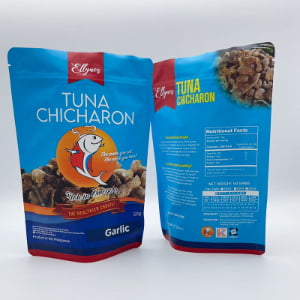
A stand-up pouch has a bottom gusset that expands after filling and creates a base, so the package can stand upright. A flat pouch has no standing bottom gusset and normally lies flat. This makes stand-up pouches stronger for shelf display, while flat pouches are compact and efficient for storage, shipping, samples, and single-use products.
I Start With the Bottom Structure
A stand-up pouch usually has a folded bottom gusset.
When the pouch is empty, the gusset remains folded. When I fill the package, the product pushes the gusset open. The opened bottom creates a wider base and allows the finished pouch to stand on a shelf.
A flat pouch uses a much simpler structure.
A typical 3-side seal flat pouch has three sealed edges and one opening for filling. After I put the product inside, the final edge is heat sealed. It remains flat because it has no bottom gusset.
This structural difference affects much more than appearance.
| Feature | Stand-Up Pouch | Flat Pouch |
|---|---|---|
| Main structure | Bottom gusset | Flat construction |
| Stands upright | Yes | No |
| Shelf presentation | Strong | Limited without hanging or secondary display |
| Empty storage | Compact | Extremely compact |
| Typical structural complexity | Higher | Lower |
| Resealable zipper | Very common | Possible |
| Single-use packaging | Possible | Very suitable |
| Multi-use packaging | Very suitable | Possible |
| Common retail use | Snacks, coffee, pet treats, powders | Samples, spices, sachets, portions |
| Shipping efficiency | Good | Excellent |
Current pouch comparisons generally reach the same conclusion: stand-up formats emphasize retail visibility and convenience, while lay-flat formats emphasize simple construction and logistics efficiency.
I Do Not Confuse Flat Pouches With Flat-Bottom Pouches
I think this distinction is especially important for packaging buyers.
A flat pouch lies flat.
A flat-bottom pouch stands upright.
A flat-bottom pouch uses a defined rectangular bottom and side gussets. It creates a more box-like package. A stand-up pouch also stands, but it usually uses a flexible bottom gusset instead of a rectangular box-style base.
So I normally separate the three formats like this:
- Flat pouch: simple lay-flat package.
- Stand-up pouch: bottom-gusset pouch that stands after filling.
- Flat-bottom pouch: structured box-like pouch with a rectangular base.
Using the correct name helps prevent mistakes when I request sizes, samples, artwork dielines, or quotations.
What Are the Advantages of Stand-Up Pouches?
I usually choose a stand-up pouch when the package itself needs to work as part of the retail presentation.
Stand-up pouches offer strong shelf visibility, large front and back branding areas, flexible sizing, and easy integration of features such as zippers, tear notches, windows, valves, and spouts. I find them especially useful for products that consumers use several times or products that depend on attractive front-facing retail presentation.
I Get Better Shelf Presence
This is the most obvious advantage.
Because the pouch stands upright, the front panel naturally faces the customer. I can use that area for the logo, product name, flavor, product image, and main selling points.
This creates a billboard-like surface on a retail shelf.
A flat pouch can also carry high-quality printing, but it cannot normally stand by itself. It may need a hang hole, display box, carton, hook, or another merchandising system.
For a product sold directly from supermarket or specialty-store shelves, this difference can be very important.
I Can Add Resealable Features Easily
Many stand-up pouch applications involve products that consumers do not finish at once.
Examples include:
- Coffee
- Nuts
- Granola
- Dried fruit
- Candy
- Protein powder
- Supplements
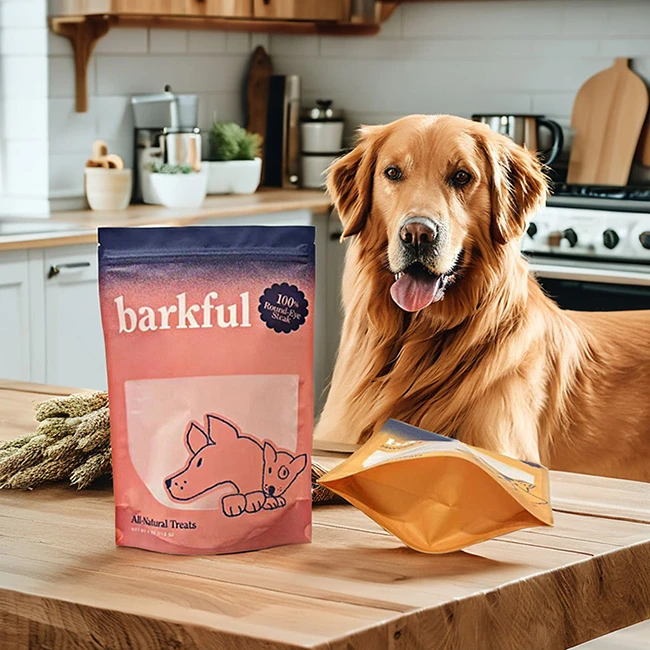
- Pet treats
- Snack foods
For these products, I often consider a zipper.
Consumers can open the package, remove part of the product, and close it again. The zipper does not replace the original high-quality heat seal or the barrier film, but it improves convenience after first opening.
I can also consider a tear notch for initial opening.
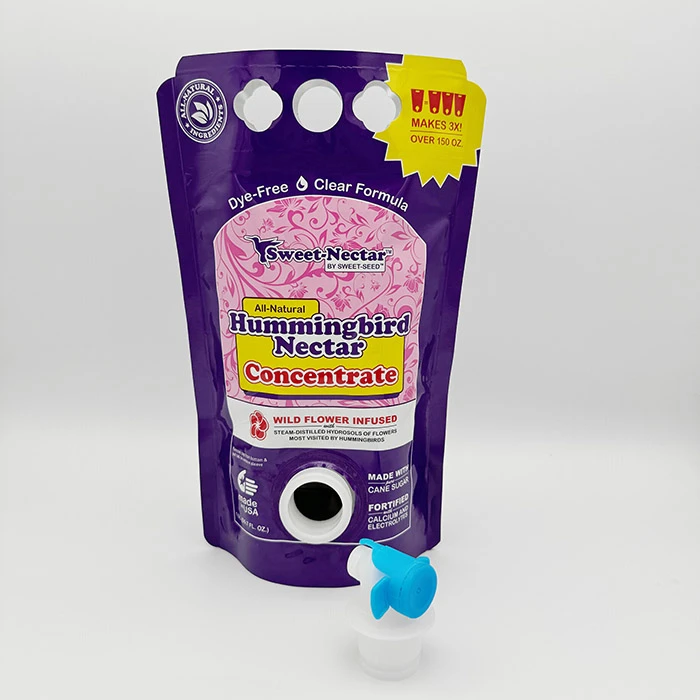
For liquids and semi-liquids, I can develop a stand-up spout pouch instead. The spout can support pouring and repeated closing.
I Have Many Material Choices
A stand-up pouch does not describe one specific material.
I can select different flexible packaging structures according to the product.
If the product is sensitive to moisture, I look for suitable moisture protection.
If oxygen can damage flavor or quality, I consider oxygen barrier.
If light creates a problem, I consider an opaque, metallized, foil, or other suitable structure.
This is why I separate pouch shape from barrier performance.
A stand-up pouch does not automatically provide a longer shelf life than a flat pouch. Barrier performance depends mainly on the selected film structure and seal quality. Recent comparisons also make this distinction clearly.
Where I Usually Choose Stand-Up Pouches
| Application | Why I Consider a Stand-Up Pouch |
|---|---|
| Snacks | Strong retail display and zipper options |
| Coffee | Branding, resealability, barrier and valve options |
| Pet treats | Easy repeated use and good shelf presence |
| Protein powder | Larger volume and zipper convenience |
| Supplements | Strong branding and multi-use format |
| Dried fruit | Resealability and shelf presentation |
| Granola | Good front-facing display |
| Candy | Retail visibility and convenience |
| Specialty foods | Premium packaging appearance |
I normally pay more attention to the stand-up structure when branding and consumer experience are important parts of the product.
What Are the Advantages of Flat Pouches?
A more complicated package is not always a better package. I often choose a flat pouch because its simplicity solves the actual packaging problem more efficiently.
Flat pouches offer compact storage, efficient shipping, simple construction, and often lower unit costs than comparable stand-up formats. They work especially well for samples, single-use portions, spices, condiments, supplement sachets, tea samples, and products packed inside cartons, kits, or display boxes.
I Use Less Structure When I Do Not Need a Standing Base
A bottom gusset is useful when I need a pouch to stand.
If I do not need that function, I question why I should add it.
A flat pouch removes the standing base. This creates a simple package with a very low profile.
For high-volume products, that simplicity can matter.
The converting process can be straightforward. Empty pouches take little warehouse space. Finished pouches can also pack efficiently when their product shape allows it.
Current industry comparisons generally identify flat pouch formats as the more cost-efficient option when shelf-standing performance is not required.
Flat Pouches Work Well for Single Portions
I think single-use packaging is one of the clearest applications.
Imagine a small amount of seasoning, sauce, powdered drink mix, supplement powder, coffee sample, tea, cosmetic cream, or another trial product.
The consumer may open the package once and use everything inside.
In that situation, I usually do not need a wide standing bottom or a large zipper.
A simple flat pouch may do the job more efficiently.
I Can Still Customize a Flat Pouch
Simple construction does not mean I have no design choices.
Depending on the application, I can consider:
- Tear notches
- Hang holes
- Zippers
- Transparent windows
- Custom printing
- Matte or glossy surfaces
- High-barrier materials
- Different film thicknesses
- Custom sizes
A hang hole is particularly useful when I want to sell a flat pouch on a peg display.
This gives the package retail visibility without requiring a bottom gusset.
Flat Pouches Can Fit Better Into Secondary Packaging
I also prefer flat pouches when individual packages go inside another container.
For example, a carton may contain 10 individual supplement sachets. A display box may hold multiple seasoning packets. A sample kit may contain several small coffee or beauty samples.
In these cases, the outside box already creates the shelf structure.
The individual pouch does not need to stand.
That makes the thin profile of a flat pouch an advantage rather than a limitation.
Where I Usually Choose Flat Pouches
| Application | Why I Consider a Flat Pouch |
|---|---|
| Seasoning | Simple, compact portion packaging |
| Sauce portions | Efficient single-use format |
| Coffee samples | Small and easy to ship |
| Tea samples | Compact and protective |
| Supplement sachets | Good for individual servings |
| Drink powder | Convenient portion control |
| Cosmetic samples | Thin format for kits and promotions |
| Promotional samples | Lower structural complexity |
| Products inside cartons | No independent standing base required |
Flat pouches are therefore not a cheaper substitute for stand-up pouches.
I see them as a different packaging solution for a different use case.
Which Pouch Is Better for Cost, Protection, and Product Type?
I do not select a pouch from one comparison point. A package that costs less per piece can still create higher costs elsewhere.
Flat pouches are usually better when cost efficiency, compact shipping, single-use packaging, or high-volume production are the main priorities. Stand-up pouches are usually better when shelf display, branding, resealability, and consumer convenience matter more. Product protection can be strong in either format when I select the correct material and sealing system.
Cost Depends on More Than the Bag Shape
If I compare two similar specifications, the flat pouch will often have a cost advantage because it does not need the same gusset construction.
The stand-up pouch usually requires more converting steps and structural material.
However, I do not stop at unit cost.
I compare:
| Cost Area | What I Check |
|---|---|
| Film structure | Material type and thickness |
| Printing | Colors, artwork, and printing method |
| Pouch converting | Structural complexity |
| Zipper or spout | Additional component cost |
| Filling | Speed, labor, and machine compatibility |
| Storage | Empty package volume |
| Shipping | Weight and carton efficiency |
| Retail display | Need for boxes, hooks, or other displays |
| Consumer experience | Resealability and ease of use |
A flat pouch may save money per unit but require a retail display box.
A stand-up pouch may cost more but eliminate the need for that display system.
This is why I calculate total packaging cost rather than only comparing quotations per 1,000 bags.
Protection Can Be Similar in Both Formats
I think this is one of the most important technical points.
The stand-up pouch shape itself does not create the oxygen barrier.
The flat pouch shape does not automatically provide less protection.
Both can use high-barrier flexible packaging materials.
I first identify the product risk:
- Oxygen
- Moisture
- Light
- Aroma loss
- Grease
- Puncture
- Leakage
- Low-temperature conditions
I then select the film structure.
For example, a small coffee sample in a flat pouch can use a strong barrier structure. A large coffee product in a stand-up pouch can also use a strong barrier structure.
The format changes how the package stands and how consumers use it. The laminate determines much of the protective performance.
Filling Equipment Can Decide the Answer
I also check the packing line before I make a final decision.
A company may already have equipment designed for flat sachets. Another company may use premade pouch filling equipment designed to open, fill, and seal stand-up pouches.
Switching pouch formats can affect:
- Pouch feeding
- Opening
- Dosing
- Filling speed
- Product settling
- Zipper position
- Final sealing
- Line speed
- Reject rate
A pouch that looks better in a product rendering may not be better if the production line cannot handle it efficiently.
That is why I always think about packaging and filling as one system.
My Insights: Stand-Up Pouches vs Flat Pouches-Which Is Better
I do not think the question has one universal winner. The better package is the one that removes unnecessary cost while keeping the functions the product actually needs.
For me, stand-up pouches are better when the package must sell the product on the shelf and support repeated consumer use. Flat pouches are better when efficiency, compactness, single-use packaging, and simple distribution matter more. I choose between them by looking at product behavior, filling, retail display, logistics, and total cost together.
I Think the Sales Channel Often Decides the Structure
This is the first question I would ask:
Where will the customer see the product?
If the individual pouch sits upright on a retail shelf, a stand-up pouch has a clear advantage.
If the individual pouch sits inside a carton, subscription box, sample kit, or display box, the standing base may provide little value.
If the pouch hangs from a retail hook, a flat pouch with a hang hole may already provide strong visibility.
The sales channel changes what the package needs to do.
I Choose Multi-Use and Single-Use Packaging Differently
Consumer behavior also gives me a simple decision rule.
If consumers open the package many times, I usually look at stand-up pouches first.
The standing design works naturally with zippers. Consumers can place the pouch on a countertop or shelf, open it, remove some product, and close it again.
If consumers open the package once and throw it away, I usually look at flat pouches first.
Why pay for a more complex standing structure if the package is used for only a few seconds?
There are exceptions, but this rule helps me narrow down the options quickly.
I Do Not Pay for Shelf Presence When I Do Not Need It
I think packaging design can become too focused on appearance.
Shelf presence has value only when the product needs shelf presence.
A 5-gram supplement serving inside a box does not need to stand.
A single coffee sample mailed to a customer may not need a standing base.
A condiment sachet used in a restaurant does not need supermarket-level shelf display.
For these products, the flat pouch can be the more logical design.
However, a 300-gram premium snack sold directly beside competing products has a different job. Here, the upright front panel can become an important part of the brand presentation.
I Treat Barrier Protection as a Separate Decision
I would never choose between stand-up and flat pouches only because someone says one offers “better freshness.”
I first select the format.
Then I select the barrier structure required for the product.
This keeps the decision clear:
Pouch structure controls presentation and usability. Film structure controls much of the product protection.
Seal strength, filling conditions, and storage conditions also affect final performance.
My Practical Decision Framework
When I compare stand-up pouches with flat pouches, I normally use this framework:
| If I Need... | My First Choice |
|---|---|
| Strong supermarket shelf presence | Stand-up pouch |
| Large front-facing brand area | Stand-up pouch |
| Resealable multi-use packaging | Stand-up pouch |
| Premium retail presentation | Stand-up pouch |
| Snacks or pet treats used several times | Stand-up pouch |
| Compact sample packaging | Flat pouch |
| Single-use portions | Flat pouch |
| Lower structural complexity | Flat pouch |
| Efficient empty-pouch storage | Flat pouch |
| Products packed inside cartons | Flat pouch |
| Pegboard display | Flat pouch with hang hole can work well |
| Lowest practical packaging cost | Often flat pouch |
| High barrier protection | Either, with the correct material |
I also ask four final questions before approving a pouch.
First, how will I fill it?
The pouch must work with the filling equipment.
Second, how will I sell it?
Retail shelves, e-commerce shipments, cartons, and sample kits create different requirements.
Third, how will the consumer use it?
A resealable family-size snack has very different needs from a single-serving powder.
Fourth, what does the product need for protection?
I specify the material according to moisture, oxygen, light, aroma, grease, puncture, and seal requirements.
Once I answer these questions, I usually do not need to ask which pouch is generally “better.”
The choice becomes product-specific.
Stand-up pouches give me stronger presentation and convenience. Flat pouches give me simplicity and efficiency. When I match the format to the actual filling process, consumer behavior, distribution channel, and product requirements, both can be excellent packaging solutions.
Conclusion
I choose stand-up pouches for shelf impact and multi-use convenience, while I choose flat pouches for compact, efficient, and cost-sensitive packaging. The better option depends on the complete application.