
](https://www.sglpackaging.com/wp-content/uploads/2026/08/How-Do-Flat-Bottom-Bags-Compare-to-Stand-Up-Pouches-in-Durability.webp "How Do Flat Bottom Bags Compare to Stand-Up Pouches in Durability? 1")
I often see buyers assume a pouch that looks more rigid must always be more durable. In practice, durability depends on structure, film, seals, product weight, and handling.
Flat bottom bags generally provide better structural stability for heavier or denser products because their broad rectangular base and side gussets distribute the load more evenly. Stand-up pouches can still be highly durable, especially for lighter products. Puncture resistance, barrier performance, and seal strength depend more on the material specification than pouch shape alone.
When I compare these two flexible packaging formats, I first define what “durability” means for the project. A package may need to resist dropping, puncturing, seal failure, crushing, repeated handling, or long-distance transportation. Flat bottom bags and stand-up pouches handle these stresses differently, so I do not judge durability from appearance alone.
Are Flat Bottom Bags More Durable Than Stand-Up Pouches?
A flat bottom pouch usually looks more structured, but I do not think that automatically makes every flat bottom bag more durable in every application.
I generally consider flat bottom bags more structurally durable when the package carries a heavier or denser dry product. Their broad base, side gussets, and defined panels help distribute weight and reduce deformation. Stand-up pouches remain very durable for many lighter products when their gusset dimensions, laminate, and seals are properly designed.
I Separate Structural Durability From Material Durability
This distinction is important.
A flat bottom bag has a more box-like construction. It normally includes a defined bottom panel, front and back panels, and two side gussets. This gives the filled package a wider footprint and several structural edges.
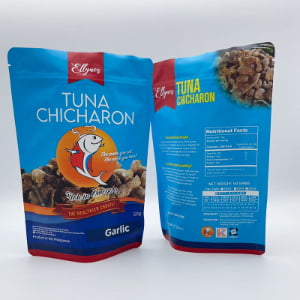
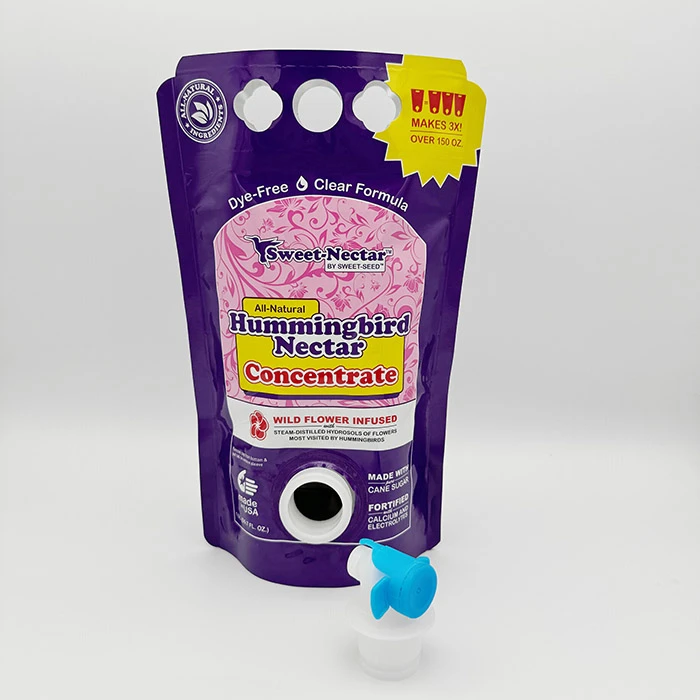
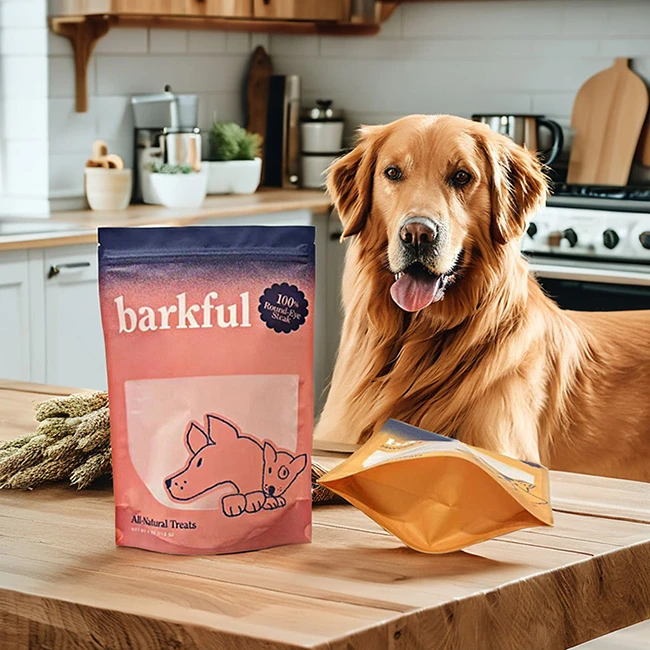
A standard stand-up pouch uses front and back panels with an expandable bottom gusset. When the product fills the package, the bottom opens and forms a base.
The two structures manage weight differently.
The flat bottom pouch spreads product weight across a wider and more defined bottom area. Its side panels can also help control outward expansion. This can be useful when I pack coffee, pet food, nuts, powders, or other dense dry products. Current packaging comparisons consistently position flat bottom formats as the stronger choice when filled stability and heavier loads matter.
However, I would not say that the film in a flat bottom pouch is automatically stronger.
A stand-up pouch made from a thick, puncture-resistant laminate can be mechanically stronger than a flat bottom pouch made from a lighter film.
I therefore compare several durability factors separately:
| Durability Factor | Flat Bottom Bag | Stand-Up Pouch |
|---|---|---|
| Standing stability | Usually excellent | Good when properly sized |
| Load distribution | Strong | Depends more on gusset design |
| Resistance to deformation | Usually stronger | More flexible |
| Heavy dry products | Often a strong choice | Suitable with correct specification |
| Puncture resistance | Depends on film | Depends on film |
| Oxygen/moisture barrier | Depends on laminate | Depends on laminate |
| Seal durability | Depends on sealing design | Depends on sealing design |
| Drop performance | Depends on structure, film, fill, and seals | Depends on structure, film, fill, and seals |
For me, the flat bottom format has its clearest durability advantage in structural stability, not in every technical measurement of package strength.
What Makes Flat Bottom Bags More Structurally Durable?
I usually see the difference become more obvious after filling because the product itself places continuous mechanical pressure on the pouch.
Flat bottom bags gain structural durability from their broad base, defined side gussets, and box-like geometry. These features can spread product weight across several panels instead of concentrating stress around one expandable bottom gusset. The result is usually better shape retention, lower tipping risk, and greater stability for medium or heavier dry products.
The Base Changes How the Load Is Distributed
I think the bottom structure is the most important difference.
A flat bottom bag creates a defined rectangular footprint. The contents can settle over a broad surface.
A stand-up pouch depends on its folded bottom gusset opening correctly. If the pouch dimensions, product volume, and fill level work together, the package can stand very well. If they do not, the pouch may lean, bow, or place more pressure on certain seal areas.
Product density makes this especially important.
Five hundred grams of coffee beans do not behave like 500 grams of fine powder. Coffee beans occupy more volume. Fine powder may settle into a dense mass at the bottom. Pet treats can create irregular pressure points.
This is why I do not select pouch size only from the weight printed on the product label.
Side Gussets Can Help Control Deformation
The side gussets of a flat bottom pouch also matter.
When the product pushes outward, these panels open in a more controlled way and help form the box-like body. The package can maintain straighter sides than a softer stand-up pouch.
This can reduce visible deformation during retail display.
It can also help when several filled packages are placed close together in cartons.
A more regular shape may distribute external pressure better during packing and transportation, although real transit durability still depends on carton configuration and fill conditions.
Four Vertical Edges Can Add Support
Many flat bottom constructions also create defined vertical corner seals or edges.
These areas can reinforce the body and help resist outward bowing. One recent structural comparison describes the box-style construction as useful for distributing mechanical stresses across multiple edges rather than allowing internal weight to pull mainly against the side seals.
I still test the finished package because construction details vary by supplier.
My typical durability checks include:
- Filled standing test
- Compression test
- Drop test
- Seal-strength test
- Leak test where relevant
- Puncture test
- Transport vibration test
- Zipper-strength test
- Carton stacking test
The structural design gives flat bottom bags an advantage, but testing tells me whether that advantage actually exists in the final specification.
Do Packaging Materials Matter More Than the Pouch Shape?
I consider this one of the most important questions because a strong-looking pouch can still fail if the laminate or sealant is poorly matched to the product.
For puncture resistance, barrier durability, flex-crack resistance, and seal performance, the film structure can matter as much as or more than the pouch format. Both flat bottom and stand-up pouches can use high-performance laminates. I therefore select the material according to the product before deciding that one shape is inherently stronger.
I Never Judge Puncture Resistance From the Shape Alone
Imagine two packages.
The first is a flat bottom pouch made from a relatively light laminate.
The second is a stand-up pouch made from a thicker structure designed for high puncture resistance.
I would not expect the first pouch to resist sharp product edges better simply because it has a flat bottom.
Puncture performance depends on factors such as:
- Film type
- Layer thickness
- Lamination structure
- Orientation of the films
- Product shape
- Sharp edges inside the pouch
- External handling conditions
This matters for products such as nuts, hard pet treats, frozen foods, granules, and industrial products.
Seal Strength Can Become the Real Weak Point
I also look closely at the seals.
A strong laminate cannot compensate for a poor seal.
Seal durability depends on the sealant layer, temperature, pressure, dwell time, seal width, equipment condition, and whether product contamination enters the sealing area.
Powders are a good example.
Fine particles can fall into the final sealing zone. If the pouch is sealed through product contamination, the effective seal strength can drop even though the film itself is strong.
Liquids create another challenge because the contents can place continuous pressure on seals during handling.
I therefore evaluate the complete package rather than comparing the number of panels.
Barrier Durability Is Also Material-Driven
I use the same logic for oxygen, moisture, aroma, and light protection.
A flat bottom pouch does not automatically provide a stronger oxygen barrier.
A stand-up pouch does not automatically provide a weaker moisture barrier.
Both formats can use laminated flexible packaging structures designed around the product's barrier requirements. Current comparisons of these pouch formats specifically note that freshness and barrier performance are not determined by shape alone.
| Protection Requirement | What I Focus On |
|---|---|
| Puncture resistance | Film strength and thickness |
| Seal durability | Sealant layer and sealing process |
| Oxygen barrier | Barrier material structure |
| Moisture barrier | Film and coating selection |
| Light protection | Opaque, metallized, foil, or suitable barrier layer |
| Grease resistance | Product-compatible laminate |
| Drop resistance | Film + seams + pouch geometry |
| Heavy fill support | Pouch structure + material strength |
For me, pouch construction and material construction need to work together.
Which Pouch Is Better for Heavy Products and Long-Distance Shipping?
I pay more attention to structural durability when a product is heavy, dense, or shipped through a long distribution chain.
I usually consider flat bottom bags first for heavier dry products because their broad base and structured side panels can improve load distribution and shape retention. Stand-up pouches can be an efficient choice for lighter fills and many standard retail products, but their durability depends more heavily on correct gusset sizing and fill distribution.
Heavy Products Create Continuous Stress
The package does not only experience stress when someone drops it.
A heavy product pushes against the pouch for its entire storage and distribution life.
This load can pull at seals, expand sidewalls, and place stress on the bottom structure.
A flat bottom bag handles this through a wider standing footprint and more defined geometry. I often consider that valuable for:
- Coffee beans
- Pet food
- Pet treats
- Nuts
- Grains
- Dense powders
- Larger dry food packs
- Specialty ingredients
Stand-up pouches can also package many of these products, but I pay more attention to the relationship between pouch width, bottom gusset, fill weight, and product density.
Shipping Durability Also Depends on the Carton
I do not evaluate the pouch alone.
A durable pouch can still be damaged if the shipping carton is too large and lets packages move excessively.
A package can also suffer if cartons are packed so tightly that sharp product pieces press continuously against neighboring pouches.
For export packaging, I normally consider:
| Shipping Issue | What I Check |
|---|---|
| Repeated vibration | Does the pouch rub against neighboring packs? |
| Stacking pressure | Can the pouch maintain its seals and shape? |
| Drops | Does the bottom or top seal burst? |
| Temperature changes | Does the film or seal become brittle or soft? |
| Product settling | Does weight become concentrated at the base? |
| Carton fit | Is there excessive movement or compression? |
| Sharp contents | Is the laminate puncture-resistant enough? |
The more structured footprint of a flat bottom pouch can help packages sit in cartons in a more organized way. Recent comparisons also note that its squarer shape can support efficient retail-ready packing.
However, this does not mean I automatically choose flat bottom bags for every export order.
If I have a lightweight snack, small refill package, or moderate fill weight, a properly engineered stand-up pouch may provide all the durability I need at lower structural complexity and material use.
My Insights: How Do Flat Bottom Bags Compare to Stand-Up Pouches in Durability
I think the most useful answer appears when I stop treating durability as one single property.
Flat bottom bags generally have an advantage in structural durability because their broad base and side-gusset construction manage heavier loads and deformation more effectively. Stand-up pouches can match or exceed them in puncture, barrier, or seal performance when specified with stronger materials. The better option depends on which type of failure I need to prevent.
I Define the Expected Failure Before Choosing the Pouch
This is the first thing I would do.
Instead of asking only, “Which pouch is stronger?” I ask:
How could this package fail?
It might tip over.
It might burst at a seal.
A sharp product could puncture it.
The film could flex repeatedly and develop damage.
The zipper could separate.
The package could deform during stacking.
The bottom could fail during a drop.
These are different problems, so they require different solutions.
If my main concern is tipping and deformation under a heavier dry fill, I normally give the flat bottom pouch an advantage.
If my concern is puncture resistance, I first compare the laminates.
If my concern is barrier performance, I compare the film layers.
If my concern is seal bursting, I look at sealant materials, seal width, equipment settings, and package geometry.
This approach gives me a much more reliable decision than choosing the pouch that simply feels thicker in my hand.
I Think Product Density Is More Important Than Many Buyers Expect
Two products can have the same net weight and create completely different stresses.
A light snack may fill most of a large pouch without placing much pressure on the base.
A dense powder may occupy a smaller volume but concentrate more weight at the bottom.
That changes the center of gravity and the load on the pouch.
This is why I prefer actual filling tests.
I evaluate the pouch after the contents settle because that is much closer to what happens after transportation.
I Do Not Automatically Add Film Thickness to Solve a Structural Problem
This is another point I consider important.
When a stand-up pouch leans or deforms, the first reaction can be to increase film thickness.
That may help in some cases.
But the real problem may be the dimensions, gusset depth, fill level, or product distribution.
Adding material can increase cost without fixing the geometry.
A flat bottom format may solve the structural problem more efficiently because the package shape itself manages the load differently.
The reverse can also happen.
If a flat bottom pouch is puncturing because of sharp contents, changing the pouch style may not solve anything. I may simply need a stronger laminate.
My Practical Durability Comparison
| If My Main Concern Is... | Format I Usually Evaluate First |
|---|---|
| Heavy product stability | Flat bottom bag |
| Reduced tipping | Flat bottom bag |
| Box-like shape retention | Flat bottom bag |
| Dense dry products | Flat bottom bag |
| Premium coffee or pet food | Flat bottom bag |
| Lightweight retail product | Stand-up pouch |
| Lower structural complexity | Stand-up pouch |
| Efficient material use | Stand-up pouch |
| Puncture resistance | Either, depending on laminate |
| Oxygen/moisture barrier | Either, depending on laminate |
| Seal strength | Either, depending on seal design |
| Long-distance shipping | Test both with actual fill and cartons |
For me, this is the central difference.
Flat bottom construction mainly improves how the package carries and distributes physical load. Stand-up pouch construction mainly gives me a lighter, simpler way to create an upright package.
Both formats can be durable.
The mistake is assuming that durability is built into the pouch name.
I want the pouch shape, material thickness, laminate, zipper, seal geometry, product density, filling process, and shipping carton to work together.
When the product is heavy and needs strong shape retention, I usually start by testing a flat bottom bag.
When the product is lighter and does not need the same structural support, I often start with a stand-up pouch because it can provide excellent protection with a simpler construction.
That is how I compare durability in a real packaging project.
Conclusion
I generally choose flat bottom bags for stronger load stability and shape retention, while stand-up pouches remain durable and efficient for lighter products. Material, seals, fill weight, and transport conditions ultimately determine real package durability.