Mainstream Flexible Packaging Materials for Overseas Markets
Different materials serve different industries and regions. Below is a structured comparison based on real export scenarios handled by SGL Packaging.
1. Aluminum Foil Packaging: Maximum Barrier for Demanding Environments
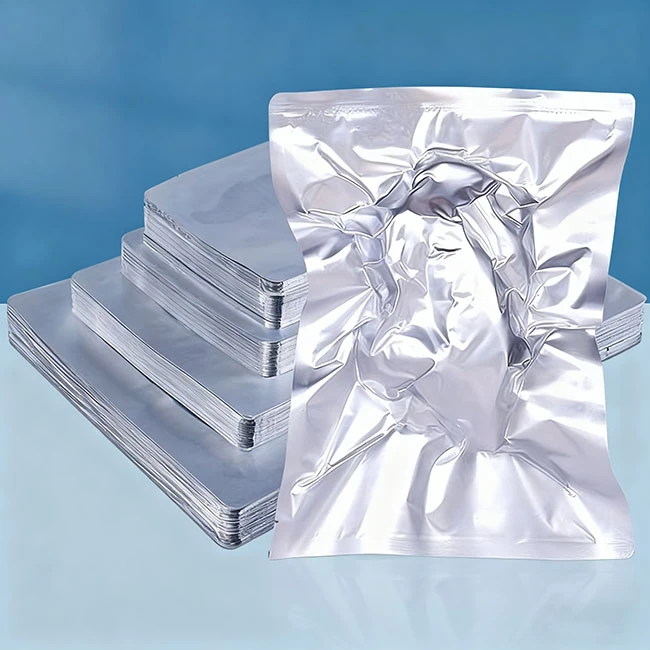
Aluminum foil packaging is the top-tier solution for products that require strong protection against oxygen, moisture, and light.
Suitable applications:
High-end food products
Retort and high-temperature sterilized food
Energy powders or supplements
Industrial components sensitive to oxidation
Advantages:
Exceptional barrier performance
High heat resistance
Long shelf-life support
Strong moisture protection
Best suited markets:
Middle East, Russia, Europe, and North America — especially for food and energy-related sectors where durability and compliance are critical.
SGL Packaging integrates advanced lamination systems and 10-color printing technology to ensure that aluminum foil structures maintain both visual precision and barrier integrity.
2. Nylon + PE Composite Packaging: Strength and Versatility
Nylon PE composite packaging combines the toughness of nylon with the sealing performance of polyethylene, making it one of the most widely used flexible packaging structures worldwide.
Suitable applications:
Stand-up zipper pouches
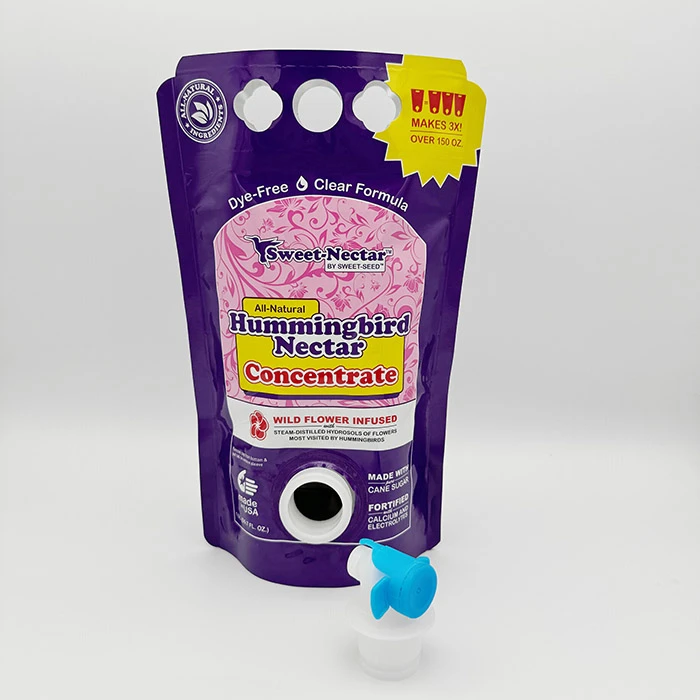
Spout pouches
Vacuum food packaging
Cosmetic refill packaging
Advantages:
Excellent puncture resistance
Strong tensile strength
Flexible and customizable thickness
Suitable for heavy or sharp-edged products
Best suited markets:
Global markets, particularly Europe, North America, and Southeast Asia where e-commerce shipping requires packaging durability.
SGL Packaging frequently recommends nylon + PE structures for clients exporting through Amazon or cross-border platforms, as this structure withstands long logistics chains while maintaining product integrity.
3. Aluminum-Plated (Metallized) Packaging: Balanced Cost and Performance
Metallized film, also known as aluminum-plated packaging, provides moderate barrier performance at a lower cost compared to full foil structures.
Suitable applications:
Snack foods
Lightweight dry food
Industrial spare parts
Mid-tier consumer goods
Advantages:
Good moisture resistance
Cost-effective structure
Lightweight and visually appealing
Suitable for mid-range market positioning
Best suited markets:
Southeast Asia and Latin America, where cost-performance balance is often a key purchasing factor.
SGL Packaging offers customized metallized structures optimized for both barrier performance and printing clarity.
4. Eco-Friendly Degradable Materials: Compliance-Driven Packaging
Sustainability has become mandatory in many developed markets. Eco-friendly materials are increasingly required for premium brands.
Applications:
Organic food
Natural cosmetics
Environmentally positioned brands
Advantages:
Compliance with EU and US environmental regulations
Enhanced brand sustainability image
Alignment with green consumer demand
Best suited markets:
European Union and high-end US markets with strong environmental regulations.
SGL Packaging provides degradable and recyclable options that still meet strict food-grade packaging standards while maintaining necessary barrier performance.
Core Principles for Material Selection by Market
1. Europe & North America
Buyers should prioritize:
Certified food-grade packaging materials
FDA or EU compliance
Eco-friendly structures
High-definition surface finish
Compatibility with 10-color high-precision printing
Consumers expect premium aesthetics and regulatory safety simultaneously.
2. Southeast Asia
High humidity and temperature demand:
Strong moisture barriers
High-toughness composites
Reliable heat sealing strength
Cost control is also important. SGL Packaging supports flexible MOQ solutions to help emerging brands scale gradually.
3. Middle East & Russia
Extreme logistics conditions require:
High-temperature resistance
Strong oxygen and moisture barriers
Durable lamination
For these regions, aluminum foil packaging is often the safest long-distance export solution.
Why Work With SGL Packaging for Custom Flexible Packaging?
Choosing the correct material is only part of the solution. The manufacturer’s capability determines execution quality.
1. Full Material Coverage
SGL Packaging supports:
Aluminum foil structures
Nylon PE composite packaging
Metallized films
PE mono-material
Eco-friendly degradable films
This allows precise matching of packaging performance with product and market demands.
2. 26 Years of Manufacturing Experience
With over two decades of expertise, SGL Packaging ensures:
Stable lamination strength
Food-contact compliant raw materials
Global export experience
Quality inspection and testing procedures
Every structure is designed to meet international safety standards.
3. Advanced Printing Integration
Material structure and visual appeal must work together.
SGL Packaging integrates:
10-color gravure printing
Digital printing for small batches
Matte, gloss, and special finishing effects
This ensures that custom flexible packaging not only protects products but also enhances brand identity.
Conclusion: Material Strategy Is Your Competitive Advantage
Choosing the right flexible packaging materials is a strategic export decision. It requires balancing protection, cost, compliance, and branding requirements across different overseas markets.
By partnering with an experienced manufacturer like SGL Packaging, buyers gain access to full-structure customization, certified food-grade packaging, and advanced printing capabilities — all tailored to specific regional demands.
If you are expanding into international markets, selecting the right material is the foundation of your global success.